How to Create a Keynote That Gets Your Audience to Think Bigger
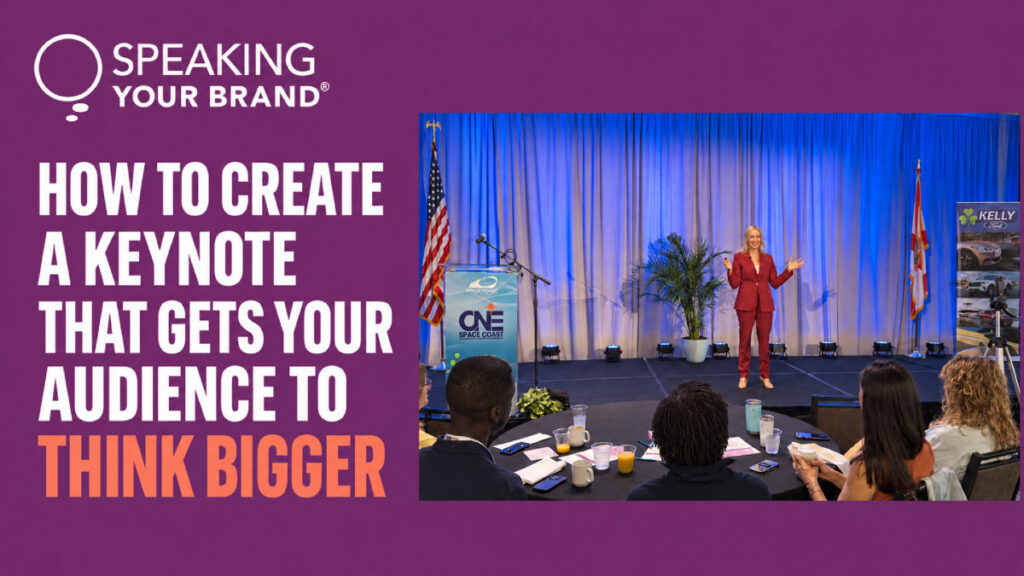
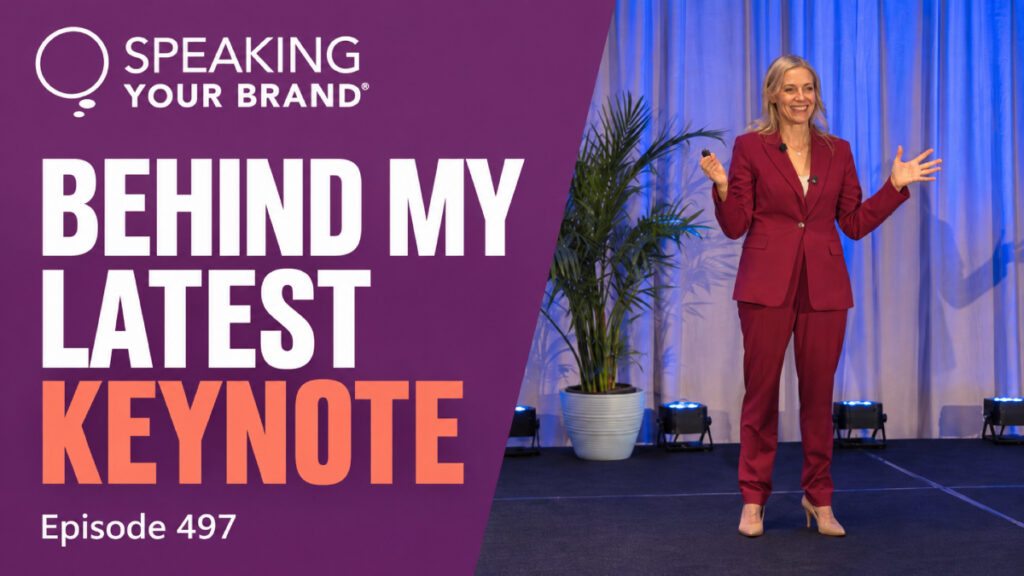
To create a keynote that helps your audience think bigger, you need to understand what matters to the people in the room, build a story and experience around that, and stay flexible enough to respond to them when you deliver it.
For a recent leadership retreat for the Space Coast Chamber of Commerce, that meant interviewing local leaders, getting out my poster board and Post-it notes when my outline wasn’t working, and updating slides in my hotel room after listening to the other speakers.
The organizers wanted leaders from government, nonprofits, small businesses, and large businesses to work together more effectively. My job was to help them see new possibilities for their community and believe they could act on them.
That’s the goal I want you to keep in mind for your own keynote. If people leave with pages of notes but no idea where to start, you may have given them a lot of information without helping them see what they could do differently.
Here’s how I approached preparing, creating, and delivering this talk, and what you can use in your own presentations.
What Should a Keynote Accomplish?
When you’re delivering a workshop or training, teaching is central to what the audience is there for. They’re expecting to learn how to do something.
With a keynote, I want to create an experience that helps people see something differently about themselves, their industry, their community, or their world. And I want them to believe they’re capable of doing something with that perspective.
This is where it’s easy to get stuck in the Expert Trap: concentrating so much on everything you know and could teach that you lose sight of the shift you want the audience to make.
For this retreat, the leaders were already doing good work. I wanted to encourage them to think and dream bigger about what they could do together.
That intention guided the decisions I made about the content, stories, and audience activities.
Strategy 1: Prepare by Learning What Matters to This Audience
I had several Zoom calls with the event organizers before creating the talk. I wanted to understand who would be in the room, what the organizers hoped the retreat would accomplish, and what challenges the community was facing.
The topic they brought me was breaking down silos. Different sectors were doing their own work, but how could they collaborate to address community challenges?
That’s a useful starting point. It still needed specifics.
Ask for Examples Behind the Topic
I asked where they were seeing those silos show up and whether they could point to community initiatives that had successfully brought different groups together.
One example was Save Our Indian River Lagoon. I spent about an hour on Zoom with two of the initiative’s leaders, asking about its background and why they thought it had worked so well.
I wanted a local example I could return to throughout the keynote. The people in the room would recognize the community and the issues involved, and we could look at collaboration through something concrete.
For your next preparation call, try questions like these:
- Who will be in the audience, and what roles do they hold?
- What would make this event a success for the organizers?
- What have previous speakers done that resonated with this group?
- Where is the challenge showing up in their work or community?
- What example could help the audience recognize what’s already possible?
Give yourself enough room in the conversation to ask follow-up questions. The first answer may give you the topic; the next few may give you the story you need.
Customize Your Signature Talk With Relevant Examples
You may be wondering whether this means you have to create a completely different keynote for every audience.
You don’t.
The way we develop a signature talk at Speaking Your Brand, it has interchangeable parts. There’s an Act 1, Act 2, and Act 3. You can adapt examples and audience questions within that structure.
For this talk, the lagoon initiative became a thread I returned to. If I delivered a version in another community, I could interview people there, find a relevant initiative, and change that example.
Your point of view can stay consistent while the stories and questions help this particular audience connect it to their own lives.
Strategy 2: Create the Keynote Where You Can See the Whole Talk
Here’s something I found a little ironic: I initially tried to develop this keynote in a Google Doc.
I had my notes and interview transcripts. I was thinking about the stories I could use and the three lessons I wanted to share. This was a new keynote topic for me, and I was having a hard time getting it to come together.
I also needed to connect the community’s challenge to my own work around story, voice, and purpose. I didn’t want to lose that connection while trying to include everything I’d gathered.
Then I realized what was happening. The outline was linear, and I couldn’t see everything at once.
So I got out the poster board and Post-it notes we use with our clients.
Use Color to See What’s Missing
Our Signature Talk Canvas® is the framework I developed to map a talk across three acts. Working on a poster board lets me see the full talk and move individual pieces around as I develop it.
Once I could see the whole thing, I could spot where I needed another example and where I’d gone too long without an audience activity. I could move things around instead of trying to hold the entire outline in my head.
If you’re stuck on a presentation, try laying it out visually. Look at where your stories appear, how much explanation surrounds them, and when the audience gets to participate.
Find an Opening Story That Connects You to Their World
I often work on the opening toward the end of the development process, once I have a better sense of where the talk is going.
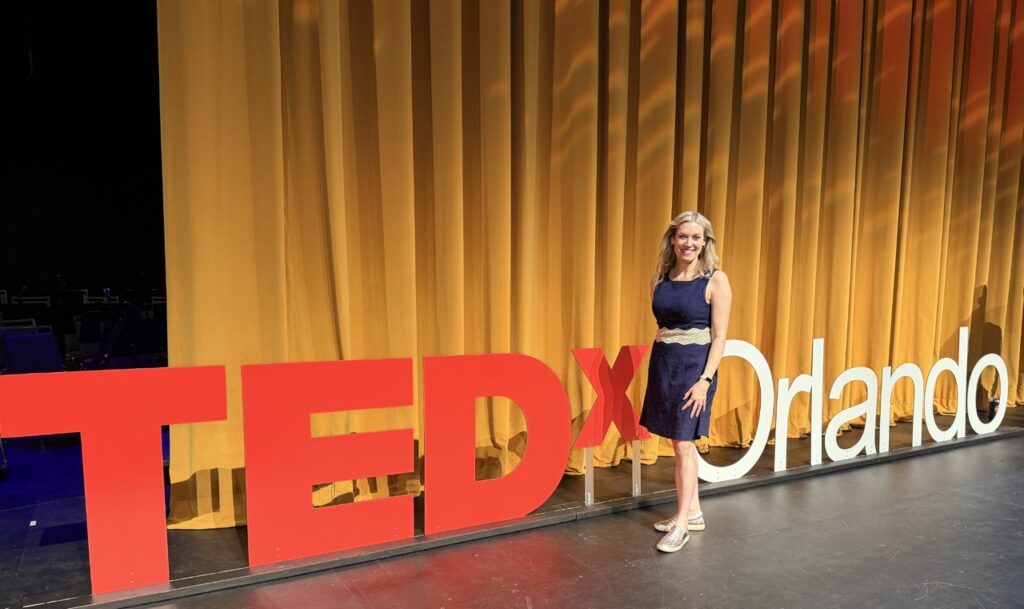
For this audience, I wanted a personal story that connected me to their interests. I grew up in South Florida, and space has always fascinated me. Then I remembered a conference I’d attended in Orlando in 2011 called the 100 Year Starship.
The conference explored the possibility of sending humans to another solar system. There were sessions on technology, engineering, and propulsion, as you’d expect.
What surprised me were the sessions on history, political science, and anthropology. If people were going to live aboard a starship for multiple generations, someone needed to think about governance, conflict, and raising children who had never set foot on Earth.
I used our IDEAL storytelling ingredients—imagery, dialogue, emotion, action, and lesson—to shape that memory into my opening story.
The lesson was about asking a bigger question. A question that big requires people from different fields to answer it. Collaboration becomes necessary because no single sector has everything it takes.
That gave us a way to think about breaking down silos in their community. From there, I could bring in the three ideas at the center of the talk: shared purpose, shared story, and shared voice.
Give the Audience Substantial Time to Participate
This session was two hours long, with about 120 people. I knew I wasn’t going to talk at them for two hours.
After each section on shared purpose, shared story, and shared voice, I gave people about ten minutes to work together at their round tables, followed by time to share what they’d discussed.
I also assigned roles. Each table had a timekeeper, facilitator, note keeper, and spokesperson. One person got to be a “spy” who visited other tables to listen to their conversations.
It made the session lively and gave people different ways to contribute. They had time to work with the ideas and hear from one another.
As you map your own keynote, ask where the audience needs time to think, discuss, or try something. Plan that time as deliberately as you plan your stories.
Strategy 3: Deliver With Enough Flexibility to Respond to the Room
Audience participation makes timing less predictable. I couldn’t rehearse this as two uninterrupted hours of speaking, because a substantial part of the session belonged to the audience.
I created a one-page outline with the three acts, activities, and timing checkpoints. Then I worked backward from the end.
I knew I needed to be on my closing lines by the one-hour-and-55-minute mark. From there, I mapped where I needed to be at earlier points, accounting for both activities and sharing time.
Plan Checkpoints So You Can Make Adjustments
During the keynote, I could compare where we were with where I’d expected us to be.
If we were running a few minutes behind, I could shorten an activity or leave out some explanation in the next section. When one discussion was especially productive, I gave people a few extra minutes instead of cutting them off.
This is why I encourage you to know your talk well and practice delivering it from an outline. You need to be able to adjust to what’s happening in the room.
For a talk with audience activities, include the instructions and the sharing afterward in your timing plan. The activity itself is only part of the time you’ll need.
Attend the Event and Listen to the Other Speakers
I was the closing keynote speaker on Saturday morning, but I arrived Thursday evening and participated in the entire retreat.
If your schedule allows you to do this, I highly recommend it. I got to talk with attendees, ask what they loved about their community, and hear the discussions leading up to my session.
On Friday, I took notes during the opening keynote and panels. That night, back in my hotel room, I updated a few slides with relevant quotes from the speakers and panelists.
When I delivered my talk, I could connect my ideas to what people had already heard at the retreat. I wanted to reflect back what I, as someone from outside their community, had heard them say they cared about.
The organizers specifically appreciated those connections and the research into local issues. Attending gave me details I couldn’t have gotten from my preparation calls alone.
A Few Questions to Ask Before Your Next Keynote
As you prepare your next talk, use these questions to check the experience you’re creating:
- What do I want this audience to see differently by the end?
- What do I know about their specific challenges and goals?
- Which story or example will connect my point of view to their world?
- Can I see the full talk well enough to notice gaps and long stretches of explanation?
- Where will the audience have time to participate?
- Have I allowed time for instructions and sharing, as well as the activities?
- What can I shorten if a valuable conversation needs more time?
- What could I learn by being present before I take the stage?
You don’t have to use every strategy in exactly the way I did. Start with the one that would make the biggest difference for your next audience.
Frequently Asked Questions
How Is a Keynote Different From a Workshop or Training?
A workshop or training emphasizes teaching people how to do something. In a keynote, your goal is to create an experience that helps people see differently and believe they can act on that perspective. Activities can support that goal.
Do I Need to Rewrite My Signature Talk for Every Event?
No. You can keep the structure and central ideas while changing examples, stories, and audience questions. A relevant local example can give a familiar talk a meaningful connection to a new audience.
What Can I Do When My Keynote Outline Isn’t Coming Together?
Try mapping it visually. We use a poster board with different colors of Post-it notes for stories, audience activities, key points, and supporting points. Seeing the whole talk helps you notice gaps and move pieces around.
Can a Keynote Include Audience Activities?
Yes. In my two-hour session, I included substantial table activities after each main section. The activities gave people time to discuss and apply the ideas. Your timing and format should fit the session you’re delivering.
How Do I Stay on Time When the Audience Is Participating?
Work backward from your closing and put timing checkpoints on your outline. Include instructions, discussion, and sharing time. Decide where you can shorten an explanation or activity if you need to adjust.
Develop a Signature Talk You Can Adapt to Your Audiences
The feedback I was most glad to receive after this keynote was that I’d helped people think differently and encouraged them to be bolder about what they could do together.
That was the experience I wanted to create. The interviews, the poster board, the activities, and the time I spent at the retreat all supported it.
If you’d like help developing your signature talk for keynotes, conference presentations, or speaking to generate leads for your business, come talk to us. You can explore the Thought Leader Academy and our in-person speaking retreat, or [Schedule a Consultation Call]. I’d love to hear your speaking goals and what you need the most help with.
Listen to Episode 497: Behind My Latest Keynote: 3 Strategies You Can Use in Your Own Talk
For more on storytelling, the rule of three, and humor and participation, listen to Episode 445: Three Must-Haves for an Unforgettable Keynote.