Why Thought Leaders Get Paid More as Speakers

Thought leadership can help you make a stronger case for your speaking fee when you can explain how your perspective will help the audience understand something differently or work through a problem they care about. Your expertise gives you material to draw from. The value of the talk also depends on what you help people do with it.
I’ve had to work on this in my own presentations. When I was preparing to speak at MAICON, a marketing conference focused on AI, I had plenty of examples. I could show a prompt, the response from ChatGPT, and what changed when the AI had access to my own content.
The examples were useful. But as I looked at my slides, the presentation felt flat. I had screenshots with a lot of text, and something was missing.
I was getting stuck in the expert trap, which was especially inconvenient given how much time I spend talking about it.
What helped was coming back to why the topic mattered to me and what I wanted the people in that room to consider about their own work. That changed how I put the presentation together.
What Are Event Organizers Buying When They Hire a Speaker?
When we talk about getting booked and paid, we can spend a lot of time on how to get the invitation. Once an organizer is considering you, there’s another conversation to have: what will your session contribute to their event?
In Speaker Industrial Complex: The 2026 Report, David Adler describes four purposes an event can be buying:
- Spectacle: The draw of a person or performance people want to see.
- Marketing: The attention or association that person brings to the event, including value for sponsors.
- Learning: Help understanding something or working through a problem.
- Networking: Opportunities for people to connect and learn from one another.
These purposes can overlap. I find the distinction useful because it explains why looking at a celebrity’s speaking fee may tell you very little about the value of your own session.
If people buy a ticket because a particular celebrity will be there, that’s part of what the organizer is paying for. Most of us are being considered because we understand the challenges an audience faces and can help them work through those challenges.
Your experience with those people, your perspective on their problem, and your ability to engage them are all relevant to that decision.
How Does Thought Leadership Add Value to Your Expertise?
I want to be clear about the title of this episode. Calling yourself a thought leader doesn’t mean you’ll be paid more than every expert or trainer. There are excellent trainers who deliver tremendous value.
What matters is the perspective you’ve developed, how you turn it into a talk, and how that talk serves the people someone is bringing you in to reach.
Your expertise comes from understanding your field and doing the work. Your thought leadership is the perspective you develop through that work. It might begin with something you keep noticing in client conversations, a belief you’ve reconsidered, or a place where the usual advice falls short.
Then you have to help other people understand why that observation matters to them.
That’s especially relevant when an audience can already find information, examples, and research through a search or an AI chatbot. As a speaker, you need to think about what happens when people spend time with you. How will your stories and perspective help them consider their own experience?
What Changed When I Reworked My MAICON Presentation?
My MAICON presentation in 2023 was about maintaining your brand voice through AI, personalization, and storytelling. I have a background in technology, so when ChatGPT came out, I started experimenting with it right away.
I was amazed at how quickly it could produce an outline or a blog post. I also realized that what it produced didn’t sound like me.
I had years of podcast transcripts, email newsletters, and other material. We worked with programmers to build a way for ChatGPT to draw from that content as the basis for its writing. That gave me all those comparisons I was putting into the presentation.
When the slides began to feel flat, I came back to a question we ask our clients: Why does this matter to you?
For me, it was connected to the importance of women’s voices. I didn’t want our experiences and perspectives to get blurred into what I call generic internet voice as we used these tools. My background in politics and as a political analyst on TV news had shown me how much having a public voice mattered.
The audience included men and women. I could share why this mattered to me and invite everyone to consider what they wanted to preserve about their own voice and experience.
Giving the Audience a Way to Work With the Idea
I also wanted people to consider brand voice beyond tone and personality. I organized four elements into the Brand Voice Canvas, using the acronym MEME:
- Mission
- Expertise
- Methodology
- Experiences
Now people had a way to connect the AI examples to their own work. They could consider which parts of their mission or methodology were coming through in the content they created.
I brought paddles with a robot emoji on one side and a human smiley face on the other. People could raise a side in response to my questions. I added humor, video clips, and personal stories.
The technical examples stayed in the presentation. But now they were part of an idea people could consider and participate in. Afterward, people lined up to talk with me. Some found me at breakfast the next day to tell me how much they’d enjoyed the session.
That experience is what I want you to look for in your own presentation: what are you helping people recognize, and how are you giving them a way to work with it?
What Danielle Hayden Found Underneath Her Bookkeeping Expertise
My client Danielle Hayden runs a bookkeeping agency and uses speaking to attract clients. She’d been successful with it, but she felt something was missing from her presentation.
When we worked together during her VIP Day, I realized she was trying to teach women entrepreneurs how to do bookkeeping. Those business owners could hire her company to do that work. There was a bigger issue her talk could help them understand.
As we talked, Danielle described a pattern she saw in her client work: women who were so concerned about spending money that they underinvested in their businesses and limited their ability to grow.
That observation gave us a throughline for her talk. She could help the audience consider the balance between spending and saving, and how their decisions affected the businesses they wanted to build.
After delivering the revised talk at a conference, Danielle reported getting more leads and clients than she’d gotten from her previous presentations. That was her experience with that talk. The useful question for your own material is what you’ve noticed through your work that your audience needs help seeing.
How Can One Signature Talk Support Different Speaking Goals?
A signature talk brings together a clear idea, a throughline, stories, examples, and a framework you can continue using. You can adapt the material for different audiences and formats.
In our work with clients, a talk might expand into a workshop, become a shorter TED-style talk, or supply material for a panel contribution or podcast interview. You’re making choices about how people will engage with the idea and how much time you have.
In episode 486, Erin Mark describes adapting her keynote for different speaking opportunities. That’s useful material to revisit if you’ve been creating a new presentation every time you’re invited to speak.
Your own goals matter here, too. Danielle uses speaking for lead generation. Another speaker may be focused on keynote fees. Understanding what you want speaking to accomplish helps you identify the events and audiences that fit your work.
What Should You Ask Before Proposing a Session?
Have a conversation with the event organizer about the event and the people attending it. Ask:
- What is the goal of the event?
- What are you hoping it accomplishes for your organization and the audience?
- What do you want participants to take away?
- What happens before and after my session?
Then connect your recommendations to the answers. Explain the perspective you’ll bring, how you’ll engage people with it, and what they’ll have an opportunity to work on.
You also need evidence of your ability to deliver. Testimonials and video help an organizer understand what having you in the room could look like. A clip of you telling a story, getting an audience to laugh, or inviting people to participate gives them something concrete to consider alongside your session description.
Try This With Your Next Presentation
Finish this sentence:
After my talk, the audience will be better able to ______.
Be specific. They might be better able to recognize a pattern they’ve overlooked, evaluate a decision using a different set of questions, or have a conversation they’ve been avoiding.
Then look at the presentation you already give or the one you’re working on. Where do you actually help them do that?
Is there an example that makes the pattern clear? Do they have time to try the questions? Does your story help them recognize why that conversation has been difficult?
You don’t need an elaborate activity every five minutes. You do need to give people enough space to connect your idea to something that matters to them.
Listen to Episode 495: What Are Event Organizers Actually Paying You For?
Frequently Asked Questions
Do Thought Leaders Always Earn Higher Speaking Fees?
No. A thought leadership label doesn’t establish the value of a talk. A useful perspective, a relevant session, and evidence of your ability to deliver can help you explain why an organizer should invest in bringing you in.
What’s the Difference Between Expertise and Thought Leadership?
Expertise is the knowledge and experience you draw from. Thought leadership is the perspective you’ve developed through that work, such as an observation about a problem or a reason you question the usual advice. Your talk helps an audience understand and use that perspective.
How Do I Get Out of the Expert Trap in My Presentations?
Look at where you’re adding information to prove how much you know. Come back to what you want the audience to understand or do, why it matters to you, and which stories and examples will help them connect it to their own work.
Can I Use the Same Signature Talk for Different Audiences?
Yes. You can adapt its stories, examples, length, and audience engagement while keeping the central idea. A keynote, a workshop, and a shorter presentation give people different amounts of time to work with the material.
Should My Speaking Goal Be Fees or Lead Generation?
Consider what you want speaking to accomplish for your business or career. As Danielle’s example shows, attracting clients can be a primary goal. Other speakers focus on paid keynotes. Your goal helps you assess which opportunities make sense for you.
Get Help Developing the Message Underneath Your Expertise
If you know you have something valuable to say but you’re having trouble finding the message in all your expertise, I understand. It’s hard to do this for yourself.
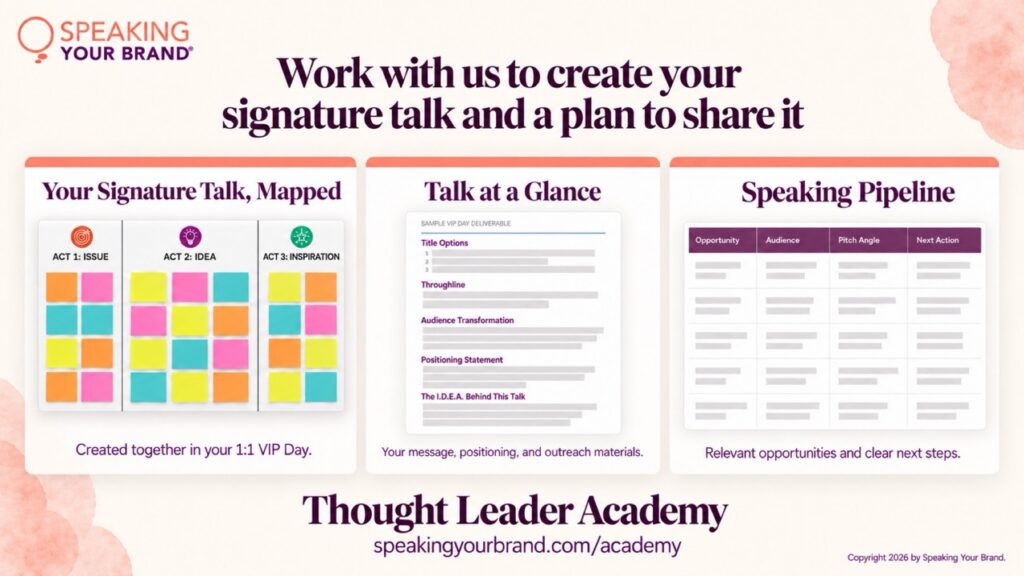
In the Thought Leader Academy, we work with you to identify the idea, connect your stories, and organize the material into your signature talk using our Signature Talk Canvas®. You don’t need to have the talk figured out before you come to us. Developing it together is the work.
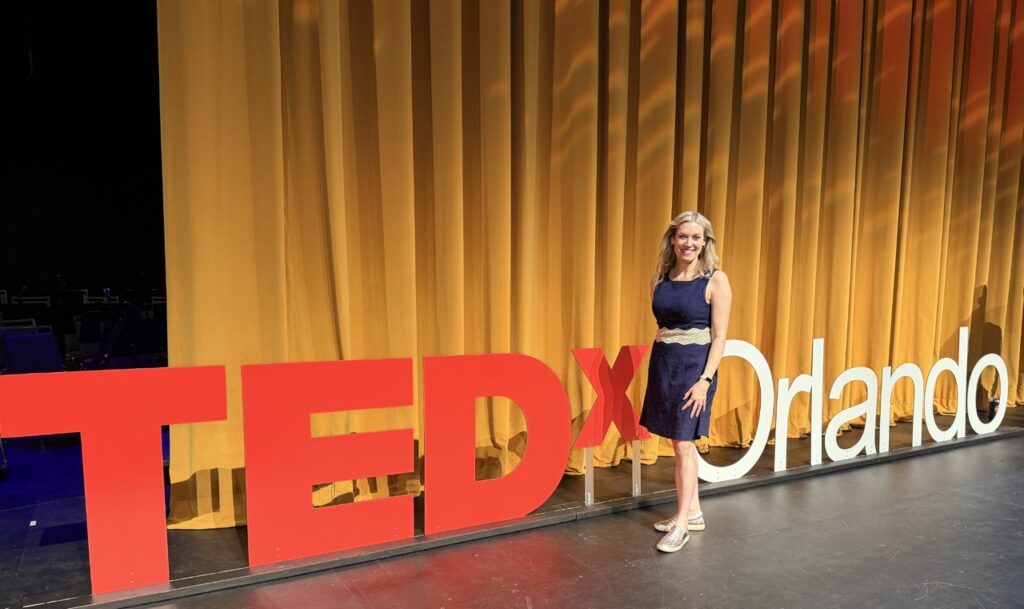
You can also learn about our three-day speaking retreat in Orlando in February 2027, where we’ll work on storytelling, humor, audience interaction, and your framework, with coaching and professional video of your stage segments.
I want more women’s perspectives shaping the conversations in our industries and organizations. Give yourself the time and support to shape what you’ve come to understand into something an audience can use.