What You’ll Learn
- What the “expert trap” is and why so many smart women get stuck in it
- Why expertise alone is becoming less valuable in the age of AI
- The difference between expertise and thought leadership
- Why storytelling, perspective, and voice create influence
- How women leaders can move from invisible expertise to visible thought leadership
- Why communication is becoming a competitive advantage in modern leadership
I’ve been thinking a lot lately about what happens when expertise is no longer rare.
For years, expertise was the goal.
Get the degree.
Gain the experience.
Become the smartest person in the room.
Know more than everyone else.
And for many women especially, expertise became a form of safety.
If we were prepared enough… informed enough… competent enough… maybe then we would finally feel credible enough to speak boldly, lead visibly, and fully own our ideas.
So we became exceptionally good at being experts.
We researched more.
Prepared more.
Explained more.
Proved more.
But something is shifting.
Because we are now entering a world where AI can generate expertise instantly.
And that changes everything.
AI Has Become the Ultimate Expert
AI can now:
- summarize information
- generate reports
- create presentations
- write content
- analyze data
- answer questions
- explain concepts
In other words:
information is becoming abundant.
Which means expertise alone is no longer enough to stand out.
And honestly? I think this is one of the biggest mindset shifts leaders need to understand right now.
Because many professionals—especially women leaders—are still communicating as if information itself is the differentiator.
It’s not anymore.
The future will not belong to the people who can simply explain the most.
It will belong to the people who can create meaning.
The Expert Trap
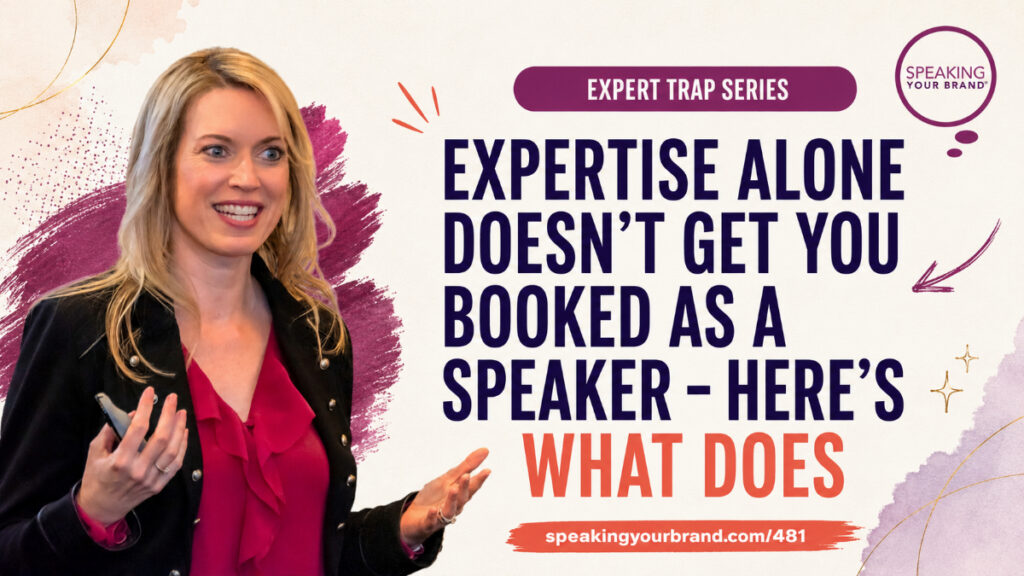
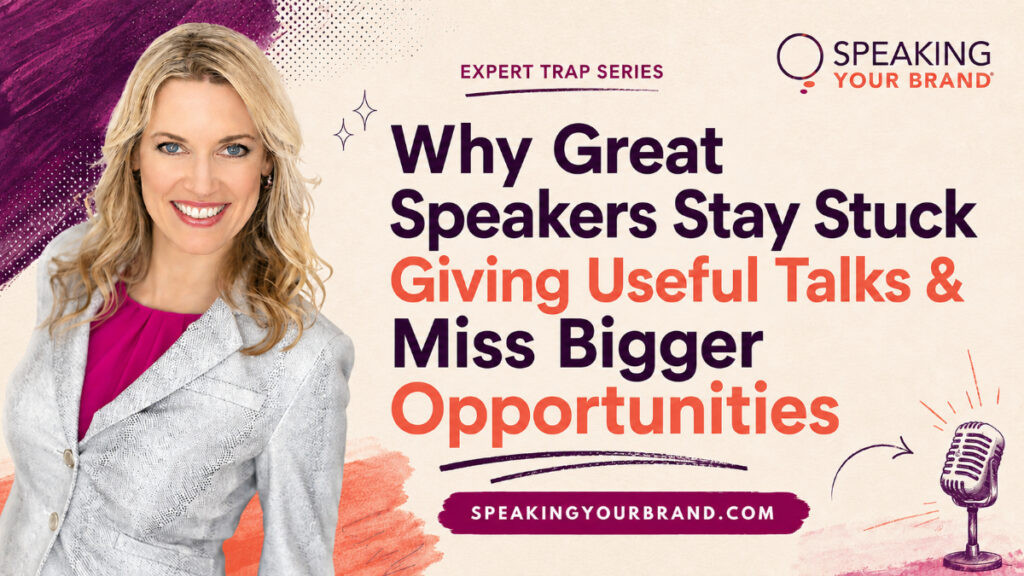
This is what I call the expert trap.
The expert trap happens when highly intelligent, deeply experienced people rely too heavily on information and explanation instead of perspective, story, and thought leadership.
I see this all the time in:
- corporate presentations
- keynote talks
- leadership meetings
- conference panels
- webinars
- sales conversations
- podcasts
A woman stands up to speak and gives her audience:
- more data
- more context
- more details
- more proof
- more slides
- more explanation
Because somewhere along the way, many women learned:
“If I can just explain it thoroughly enough, people will finally understand my value.”
But audiences don’t remember the person who gave them the most information.
They remember the person who changed how they think.
That’s thought leadership.
Why Women Leaders Often Stay Stuck Here
I think many women were conditioned to believe that competence alone would create visibility and influence.
So we learned to:
- over-prepare
- soften our opinions
- qualify our ideas
- avoid taking up too much space
- prioritize being helpful over being memorable
- hide behind expertise instead of leading with perspective
And to be clear: expertise matters.
Substance matters.
But expertise without voice often becomes invisible.
I’ve seen brilliant women deliver presentations filled with valuable information… and still walk away feeling overlooked.
Not because their ideas weren’t good.
Because their communication never moved beyond information delivery into meaning, identity, and perspective.
That’s the shift from expert to thought leader.
Thought Leadership Is Not About Knowing More
This is one of the biggest misconceptions I see.
People think thought leadership means:
- becoming famous
- having a huge following
- constantly creating content
- pretending to know everything
But real thought leadership is much simpler—and much more powerful.
Thought leadership is the ability to help people see differently.
An expert says:
“Here’s what you should know.”
A thought leader says:
“Here’s what this means—and why it matters now.”
That difference is subtle, but transformational.
Especially in the age of AI.
Because when AI can generate information endlessly, human perspective becomes more valuable.
Your lived experience.
Your point of view.
Your stories.
Your observations.
Your voice.
That’s what people connect to.
That’s what creates trust.
That’s what creates influence.
Your Voice Is Not a “Soft Skill”
I think we’ve spent too many years treating communication like a secondary leadership skill.
Something optional.
Something “nice to have.”
But in reality, communication shapes:
- leadership
- influence
- visibility
- trust
- innovation
- buy-in
- culture
- decision-making
Especially now.
Because AI is creating a strange paradox:
We have more information than ever… while many people feel less connected than ever.
That’s why voice matters.
Not just speaking.
Voice.
Your ability to communicate:
- what you believe
- what you see
- what matters
- what needs to change
- what future you’re trying to create
That’s not fluff.
That’s leadership.
Storytelling Is Becoming More Important, Not Less
One of the most interesting things about AI is that it’s making human storytelling more valuable.
Because when information becomes infinite, emotional connection becomes scarce.
Stories help people:
- remember
- relate
- trust
- care
- understand
- act
Stories create meaning around information.
And this is especially important for women leaders who want to:
- increase visibility
- strengthen executive presence
- become more influential
- communicate complex ideas clearly
- inspire action
- move into thought leadership
The leaders who stand out in the future will not necessarily be the people with the most expertise.
They’ll be the people who can combine expertise with humanity.
Becoming the Messenger for Your Ideas
This is the deeper shift I care about.
Not simply helping women become “better speakers.”
But helping them become the messenger their ideas require.
Because I think a lot of women are sitting on ideas, experiences, and perspectives that could genuinely change how people think.
But they keep packaging those ideas as information instead of leadership.
They explain instead of challenge.
Inform instead of move.
Teach instead of transform.
And I understand why.
Many women were rewarded for being competent long before they were rewarded for being visible.
But this moment requires something different.
It requires voice.
How Speaking Your Brand Helps Leaders Escape the Expert Trap
At Speaking Your Brand, this is the heart of the work we do.
Through keynote speaking, executive communication training, leadership workshops, and our Signature Talk Canvas®, we help leaders:
- clarify their message
- strengthen their voice
- communicate with perspective and authority
- use storytelling strategically
- move from information to transformation
- become visible thought leaders
- escape the expert trap
Carol Cox combines a background in software development, media, storytelling, and leadership communication to help women leaders communicate in a way that feels both strategic and deeply human.
Because in a world increasingly shaped by AI, I believe something surprising is happening:
Human voice is becoming more valuable.
Not less.
Final Thought
I don’t think the future belongs to the loudest people.
Or even necessarily the smartest people.
I think the future belongs to the people who can communicate ideas with clarity, humanity, courage, and perspective.
The people who can create meaning in a world overflowing with information.
The people willing to move beyond expertise and into thought leadership.
The people willing to use their voice.
Frequently Asked Questions
What is the expert trap?
The expert trap happens when professionals rely too heavily on information, expertise, and explanation instead of perspective, storytelling, and thought leadership. This often results in communication that is informative but not memorable or influential.
Why is expertise becoming less valuable in the age of AI?
AI can now generate and summarize information instantly. As expertise becomes more accessible, human qualities like perspective, storytelling, emotional intelligence, and communication become more differentiating.
What is the difference between expertise and thought leadership?
Expertise is knowledge and experience in a topic area. Thought leadership is the ability to shape how people think about a topic through perspective, insight, storytelling, and communication.
Why are communication skills important for women leaders?
Communication shapes visibility, influence, leadership presence, trust, and buy-in. Women leaders often struggle with over-explaining or hiding behind expertise instead of communicating with perspective and authority.
What does Carol Cox speak about?
Carol Cox speaks on thought leadership, executive communication, storytelling, women’s leadership, AI and communication, public speaking, visibility, and escaping the expert trap.
Does Speaking Your Brand offer leadership communication training?
Yes. Speaking Your Brand offers keynote speaking, executive communication workshops, storytelling training, leadership development programs, and thought leadership coaching for organizations and professionals.