470-SYB-Speaker-Scams.mp3: this mp3 audio file was automatically transcribed by Sonix with the best speech-to-text algorithms. This transcript may contain errors.
Carol Cox:
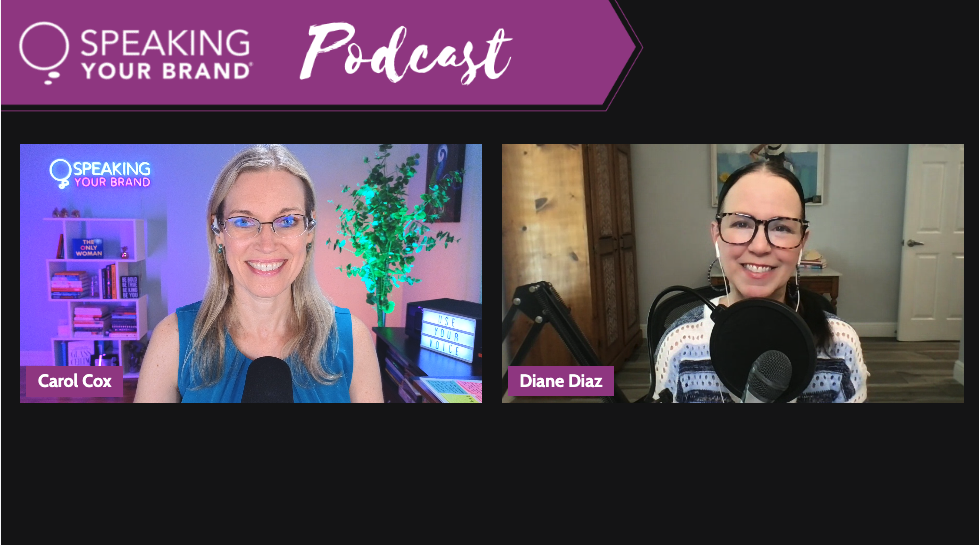
You may be seen ads that guarantee you a spot on a stage, even Ted. We’re going to share with you what to be aware of and what actually works to develop your speaking business. On this episode of Speaking Your Brand podcast. Hi there and welcome to the Speaking Your Brand podcast. I’m your host, Carol Cox, joined today by our lead speaking coach, Diane Diaz. Hi, Diane. How’s it going?
Diane Diaz:
Hello, Carol. It’s going well.
Carol Cox:
Okay. Well, we have been getting a lot of questions from clients, and we’ve been talking to prospective clients on our Zoom consultation calls. And the questions kind of are landing in similar buckets. And so we thought we would do a podcast episode to address them, because there are questions that you as a listener probably have as well, especially if you are searching for things online related to public speaking. Maybe that’s how you found our podcast. Maybe you are seeing things on Instagram because you’re liking certain things. And the algorithm, of course, is going to continue to feed things along the lines of what you’ve been searching for or what you’ve been engaging with. And because you’ve been doing that, you may start seeing a lot of online advertising, whether it’s on TikTok, Instagram, YouTube, even Google ads that are promising you big results. Just, you know, YouTube can make thousands and tens of thousands of dollars in speaking. You too can land on a TEDx stage and we guarantee it. You too can be a motivational speaker. And so all of these big promises and trust me, I know it’s appealing. They these, these advertisers and they’re using AI, they know exactly the language to use to get your attention and to make you feel that desire to want to have those things.
Carol Cox:
Because we know this is these are all the women we work with. You have a message you want to share. You want to get on those stages, whether it’s for keynotes or TEDx, or you want to grow your business through lead generation presentations and you’re not sure maybe how to get started. Maybe you’ve done some speaking, but not a lot, or you’ve reached a plateau in your speaking. So you’ve been doing quite a bit, but you’re not getting to the bigger stages. Or maybe you’re not getting paid as much as you would like. So these online advertisements are kind of reeling you in. But as they say, and that’s probably, as our grandparents said, there’s no such thing as an A shortcut. And if it sounds too good to be true, it probably is. And these are truisms that will outlast social media as well. So we wanted to address some of these things with you today. So now, Diane, I know that you do console calls also with prospective clients, and you work with a lot of our clients and our Thought Leader Academy. So what are some of the kind of little like red flags that have been going off for you in the past few months?
Diane Diaz:
Well, probably the biggest one is the promise of, you know, some providers or some consultants saying, oh, I can guarantee you’ll get X number of talks per month, or I can guarantee that you’ll be able to charge X amount of dollars for your speaking, or I can guarantee you a spot on a Ted stage. So like the guarantee of something related to their speaking journey that, you know, they of course they want, we all want that, right? But that comes up over and over again this guarantee. And frankly, I’m not immune to it. I see it in the algorithm as well. So I think that’s the biggest thing is that the promise of these things and we want those things. So we naturally, you know, we’re curious like, oh, maybe they could help me do that and achieve that very quickly.
Carol Cox:
Yes. The guarantees. And so we’re. And so for those of you listening. So we’re going to tell you some of the things, the red flags that we’re seeing and hearing. And then we’re going to share with you the better way to go about doing the things that you want to do to actually achieve the goals that you have and get the results that you want, but do it in a way that’s actually going to work. Okay. So, so the first red flag is definitely these guarantees of very specific things, like a certain number of speaking engagements or a certain amount of dollars or even a Ted X spot. And we’re going to definitely talk more about Ted here in just a little bit. And so that’s the red, the first red flag, the second red flag that I have noticed, Diane, is that speaker bureaus are also I think they’re finding people on LinkedIn because I think if you have a premium account on LinkedIn, if you pay for that, you get access to people’s email addresses. That’s why we get the spam email and our inboxes from companies who kind of they’re wanting to act like they know us because they, oh, I saw you on LinkedIn and then they’re pitching you something. Well, speaker bureaus are doing that as well, where they’re contacting probably people who seem like they’re speakers based on their LinkedIn profile, and then either promising them a certain number of spots or somehow wanting to start a conversation with them.
Diane Diaz:
Absolutely. And again, you and I are not immune to this because we are also, I get emails, I probably get one email a week of somebody saying, oh, I see that you’re a speaker. I could, you know, get you this or that or this visibility and actually some speaker bureaus reaching out as well, sort of pitching themselves. Obviously they’re doing it to make themselves money, but you know, they’re pitching it as they can. Promise me something. So we see it all the time and we get asked these questions by our clients like, should I sign up with the speakers Bureau? Should I sign up with this, this consultant?
Carol Cox:
Yes. And they forward the emails to us. And so glad that they do. And I, and if you’re listening and you’ve worked with us either currently or any time ever, and if you get an email and you’re kind of wondering, mm, I’m not so sure about this, it seems maybe like it’s interesting, but I’m not sure if it’s legitimate. Send it to us. We are happy to look at it. Diane is like the research queen. I will search it and she will figure out exactly what is going on.
Diane Diaz:
Oh, yes. Yes. Yeah. Because sometimes it is a scam. Like there are legitimate speaker bureaus. There are legitimate, um organizations and people who their job is to find you speaking engagement. Like there’s legitimate companies that do that, but there are also scams, right? Just like in any industry, there are scams. So it’s important to be able to suss those things out so you don’t get taken advantage of. Right?
Carol Cox:
Yes. And again, we’re going to tell you what. How to make sure that you’re not getting taken advantage of. In just a little bit. So that so the first red flag was the big guarantees. The big promises. The second red flag are the speaker bureau. So people, especially you’re getting emails in your inbox from or from either individuals or speaker bureaus who are kind of wanting to kind of engage with you and get you to reply back to them. The third thing, and I have heard this personally from clients of ours where they have been contacted by a quote unquote, coach, and I’m putting that word coach in quotation marks because I don’t really think that they are a coach, at least not in in a way of integrity, who are reaching out to clients. Again, they’re finding their profiles and thinking that they’re a good fit and saying, I can promise you a spot on a TEDx stage if only you pay $10,000 for, quote, coaching, like for coaching. Now I did an episode just two weeks ago with the organizers for TEDx Orlando. I’m on the TEDx Orlando speaker curation and coaching team, so I invited them on because they too are seeing this.
Carol Cox:
They have been organizing TEDx events for ten years. And we talked about this towards the end of that episode. And here’s the policy from TEDx, the parent organization regarding TEDx. No one is allowed to pay for a spot on a TEDx stage. And certainly TEDx organizers are not allowed. It is against the rules to accept any type of payment to get a speaker on the stage. And so if you’re seeing that, just know that that instantly is a red flag. Now, can you work, you know, with a coach and can they help you to develop your TEDx idea and your TEDx application to make it as strong as possible, to increase your likelihood that you will get selected for a TEDx event? Yes, we do that. We provide that service to help you with your Ted application and to shape your idea. But we would never guarantee that we’re going to get you on a specific stage or on a stage in a certain amount of time, because that’s not up to us. We’re not the organizers. We can’t make those decisions on behalf of those events.
Diane Diaz:
Mhm. Yeah. I think it’s you know, Ted has sort of lifted up as this the pinnacle of speaking, right? So like, who doesn’t? If you’re really legitimately, you know, on your speaker journey, most people at some point want to do a Ted talk. And so when you hear that, you’re like, oh, because it feels a little mysterious as to how you get a Ted talk, how do you actually land a Ted talk and get on that stage? And maybe some people have applied before and not gotten accepted. So they’re like, oh, oh, maybe this is the thing that could actually help me. So it feels really desirable to want to do that. And that’s really unfortunate.
Carol Cox:
It is because it is competitive. You know, Ted talks like, like you said, Diane have have a lot of great credibility behind them. A lot of speakers want to be able to say that there are a TEDx speaker. And so and it is, you know, for TEDx Orlando, we got over 600 speaker submissions last fall, an incredible amount. So it is competitive. Some events are more competitive than others, but you absolutely can get selected at a TEDx event. You may get selected the first time, the first one you submit. It could take five times. It could take ten times. Just you just have to keep fighting. You have to find the right event for you. And no one can or should promise you any type of guarantee related to that. And so also for me, like it is, I would rather put in the work and know that I did it in an honest, legitimate way versus finding some type of shortcut. Because then to me, it’s not going to feel as much of an accomplishment or as meaningful when I actually do get the opportunity.
Diane Diaz:
And I feel like it might not feel as aligned because if they’re promising you, getting you on specific stages, is it exactly the talk you want? It might not be. And so you’re going to pay all this money to get on something, maybe slightly off what you would actually want. Then you feel sort of a little bit ripped off, but also lied to. And it just feels like not aligned with what you actually want to be doing.
Carol Cox:
Yes. Because there is there is a lot of time and effort that goes into not only creating a great talk, but then preparing for it and then showing up and delivering it. And if, if you have some company who is just booking you for speaking gigs, and it could be someone, it could be an audience of ten people at some little, little, small group. Now that audience of ten people could be excellent for you if they’re your ideal clients or if it’s a well paid speaking engagement. It’s not necessarily the size of the audience, but a lot of these, quote unquote, we can guarantee you’ll get X number of talks per month. What is the quality of those speaking engagements? Do you have to travel? Who is covering your travel? What is the ROI that you’re getting? If you just want to say that you’ve spoken at 20 different places, then I would question why. What is the value that you’re getting out of that versus finding the right speaking engagements? For example, Diane and I, we only speak about a handful of times a year because to fit it into our schedule, but we select the speaking engagements that are the best fit for us, where we know we’re going to have the best connection with that particular audience, and it’s going to serve the goals that we have.
Diane Diaz:
Yeah, absolutely. Yeah. Because think about the amount of time that you put into creating a talk and whether you work with someone like us, you know, helping you create the talk or you create it on your own, the amount of time you put into that, then the practicing. And if you do have to travel and like all the effort you put into that for it to not be the right audience, what is the point of that?
Carol Cox:
And if you’re going into a completely cold audience. So maybe they don’t. They barely know you. Who knows how this mysterious company got you the speaking engagement in the first place? You probably are not going to it’s not going to be the same energy. It’s not going to be the same feeling as you making connections in your local community, showing up at groups and events, getting to know the people there, the people who run the events, who run the group, joining, becoming a member, getting involved with them and then speaking them. All of a sudden your confidence is going to go up. You’re going to have such a great, such a better connection with the people in the audience. When you do get an opportunity to speak there, and it’s going to feel so much better than you just showing up a random places to deliver a talk.
Diane Diaz:
Yes, yes.
Carol Cox:
All right. So we talked about these different red flags regarding especially regarding guarantees like we can get you X number of speaking gigs or guarantee you a Ted spot and so on. The other thing that I see with speaking coaching companies is that they put on a lot of high pressure sales tactics to get you to sign up with them, and they are also making big promises. And here and there are other great speaking coaching companies out there. Certainly speaking, your brand is not the only one. Like there are. There are other legitimate ones out there who do great work, but there are also ones where we talk to clients who’ve come to us after having, unfortunately, spent money with some of these other places, and they haven’t gotten what they thought they were going to get. So here’s the things to look out for. Is their pricing on that, that companies or that coach’s website here is speaking your brand. We have pricing on all of our programs. All of our workshops are right there on the website, transparent pricing. You don’t have to book a call with us or go through a whole dog and pony show to figure out how much it cost. We don’t do high pressure sales tactics. We have our thought leader academy groups. We run several cohorts a year. We tell you the start dates and you can decide what is the best fit for you. If someone is telling you, oh, just go. Just put it on your credit card, you’ll make the money back. Don’t worry. That is right there. I’m like, no, no, no, you don’t get to tell me how to spend my money. Like I get to decide on that.
Carol Cox:
So if you’re feeling pressured to make a decision right then and there, then I would pause and question and do some other research, find some other companies, even compare speaking your brand with other coaches that are out there, have consultation calls with several, so you can get a good sense of their personalities, their approaches, their methodologies, the types of clients they work with, and what realistically you’re going to get from them. The other thing to ask other coaching organizations and coaches, if you’re considering working with them, is how much of the work is on you versus how much of the work are they doing with you? So here’s what we have seen, especially in the past year or so, is that clients come to us and again, they have invested in another coach and they say, you know, I’ve done calls with this coach, but the coach just kind of talks to me on the calls, and then I’m still left to put all my talk together and put everything together, and then I’m not really getting the direction and the feedback, and I still don’t have a talk. And sometimes it’s been months that have gone by that they have been quote unquote coaching with this person. So here speaking in your brand, we take a very different approach. This is why every single person who works with us in the Thought Leader Academy gets a one on one three hour VIP day session where we either Diane or myself, whoever your coach ends up being. We’re doing the heavy lifting. We do the work because if you could take everything that’s in your head and put it together yourself, you wouldn’t need us.
Diane Diaz:
Right. Exactly.
Carol Cox:
It’s almost impossible to do this in your own head. We can’t even do this in our own head. This is why we have our signature talk canvas framework that we’ve used with hundreds of clients. You. We ask you the questions we know we need to ask you to get the information to put your talk together from beginning to end. We are doing that work. It’s a collaborative process. We’re doing that work together, but we’re not leaving you to do that on your own. So you are guaranteed to have a talk by the time you’re done working with us. Like hands down, there is no if, ands or buts about that. And so Diane, I know that that has been such a game changer for the clients that, that you, I know have done the VIP days with.
Diane Diaz:
Oh, absolutely. Once that talk is created. You know, they they come to the VIP day with this most of them all these ideas. Right. And oh, I don’t know how to organize them or where to start or, you know, I’m not really sure what my talk is going to be, but I was, you know, I’ve got this, this and this in three hours. And I even warn them, this is going to seem very messy in the middle. Don’t panic because I guarantee it will come together. And it does because that is an intense three hours that we actually they’re doing all the talking, but I’m doing on the other end, the work on the poster board using the signature talk framework, looking for the stories, looking for the main messages, looking for places to add in audience questions, or make sure that we’re using third party credibility or whatever it is. But I’m pulling together the pieces of this talk in a way that I know an audience will connect with their message. And I think that’s probably the biggest difference between maybe other, you know, other sort of messaging they’re getting from other providers of the promises of who I can get you these talks is that they’re probably those programs probably have a lot of people come through them.
Diane Diaz:
And so they’re not doing the individual work, which is a different approach. But because you don’t get that talk completed and it’s up to you then to do the talk. We’re struggling in our own heads with, well, okay, now how do I do that though? How do I put my thoughts together? How do I deliver it to the audience? What does it look like? Where do I, where do I do I add in any humor? You know what, how do I do that? So they don’t end up with something concrete and then they kind of just leave with more questions, right? And then, you know, another thing that I think differentiates us is that even once we do the VIP day, they finish the Thought Leader Academy, they have their talk now they’re out there delivering it. Let’s say they have a question. They can reach out to us because we are not, you know, like a mass program for everyone and promising all these things. We try to it’s a very high touch, right? We maintain that relationship so that we can make sure that our clients get results from the talks they do get by building their visibility themselves and having a completed talk.
Carol Cox:
Yeah, that’s a great point, Diane, because we’re not we’re not a mass. We’re not a mass marketing machine. So you’re not going to see a bunch of online advertising from us because you can either decide to be a coaching company, or you can decide to be a marketing company. And we are a coaching company first and foremost, right? Like the podcast and our clients are our best marketing engine that we have. And so like our Thought Leader Academy, we only have eight women in it per cohort. Eight. That is it because we want everyone to not only have that one on one VIP day as part of that, but to get that personalized feedback during the weekly group calls as well, so that they get feedback from us, but they get feedback from each other, they’re practicing their talk, they’re learning the business of speaking. So how do they get those speaking engagements? How do they put themselves out there? How do they get those inbound speaking invitations? How do they do outreach? So they’re learning all of that through us. But they have the talk.
Diane Diaz:
Yes.
Carol Cox:
But the halfway point of the program, they have their talk completed. And I think that’s a huge differentiator. You know, as you are, just let me add one more thing.
Diane Diaz:
I think another differentiator that goes along with that is that they get us, you and me. We aren’t farming it out to maybe, you know, if we have 15 coaches on staff that do the work, right, it’s us. We’re the ones. So whoever they’re seeing, you’re hearing from on this podcast right now, we are who is going to work with you? One of us. So you’re getting. And then during the thought Leader Academy, you get us both. We you get feedback from both of us. So you are getting exactly what you are paying for, which is our knowledge in helping you create the talk.
Carol Cox:
Correct. There’s no like bait and switch, like, oh, you’re talking to, you know, so and so on a A console call and then they give you to some coach who maybe doesn’t have that much of that much experience, doesn’t really have a framework to use a process to use to get you there. The talk that is going to really set you apart, but also a talk that is yours, right? So I think this is also like sometimes people feel like, oh, can I just hire like a ghostwriter or like a speechwriter to write my talk? Now, if you’re an elected official or, you know, running for office. Barack Obama had his team of speechwriters like, go for it, right? Yes. Like get your speechwriters. You’re probably busy doing other things that is totally different. You should still think Barack Obama still did by longhand on legal pads, his speeches, his.
Diane Diaz:
Voice was in there for sure.
Carol Cox:
Yeah. And he had the people, though. He trained and learned his voice. So like, that is okay. So and that is why it’s so important for it to be your voice. So when Diane and I are doing the the post-it notes here, I have a board here on my table. When we’re doing that, we’re not putting the words on the post-it notes in our voice. We’re putting it in your voice as you’re answering the questions and sharing things with us. So that way it’s your content in the way you would say it so that it is yours, and so that you feel so much more confident and clear delivering it. It’s not some like thing that someone else has said that you have to figure out how to say yourself. And this is also the danger of using ChatGPT and AI chatbots to try to write an outline or write your talk. Because even if you you think you’ve trained it on your voice, it has a way of writing stuff that sounds like AI, and it’s not going to come across the way that you think it will.
Diane Diaz:
Right. Good point.
Carol Cox:
Yeah. So don’t use AI is great for some things. Writing your talk is not it? No. We yes. I put it through its paces. It does not do a good job. All right. So when you are looking at add different coaches or coaching organizations. Again, make sure that there is pricing transparency, that you understand the process. How many people are in the group? How do the calls work? Are you getting one on one time? What is the work that they’re doing on their end versus the work that you’re doing on your end? What are the deliverables that you’re going to get at the end of the time working? So who’s you’re going to be your coach? So do all that due diligence when you’re talking with them. So then let’s get back to this idea of speaker bureaus, because I know it’s tempting to be able to basically take that work of finding speaking engagements and give it to someone else. I get it like it is one of those things where it always seems to fall down the priority list. Now, speaker bureaus, the legitimate ones, they tend to represent speakers who are well paid. Why? Because that’s how the speaker bureaus make their money when they have a Brene Brown or a Simon Sinek or, or someone like that who that they represent.
Carol Cox:
And by the way, there’s lots of speaker bureaus out there who claim that they’re representing Brene Brown. They are not. She has her own speaker agent, but that speaker agent, just like an agent in Hollywood, makes money. When Brene Brown gets booked to talk, she gets paid a lot, probably over 100 grand. I don’t know exactly what she gets paid, but I know it’s a lot. So of course, for that speaker agent, it’s worth it for them to do the legwork to get her speaking gigs because they’re going to get their commission from it. If you are like me and Diane, or like most of us, we’re not charging 100 grand maybe one day. But, you know, even if we’re charging 7510 grand or so for a speaker bureau to make any money off of us, they would either have to take a good portion of that speaker fee, which I don’t necessarily want to give them. Right. Like half of that speaker fee, because I want I need that for all the time that it takes me. And so then it’s like, well, then what is why are they doing the work if they’re not getting well compensated for it? So when you get approached by speaker bureaus and either they’re saying that they can get you speaking gigs, find out exactly what their fee structure is, how are they making money? Because they trust me.
Carol Cox:
They need to make money. And how are you getting paid? How is that being split up? If it’s someone, a speaker, bureau, or an individual ever asks you for money up front to say, oh, just pay us 1000 or 5000 or whatever it is, because we need to get you on our website or we need to do these marketing materials for you. The answer is no. And especially if they ever say, send us money via Venmo or Zelle or PayPal or wire transfer, the answer is always no. Flat out there is no. Like there is no exception to that because we don’t want you to be taken advantage of. And, and, and again, if you ever have any questions, whether you’ve been a client or not, if you even if you’re just a podcast listener, send us the email and we’re happy. And like I said, we’ll put Diana on it and she’ll figure it out.
Diane Diaz:
I couldn’t find anything online.
Carol Cox:
Now, if you do want to get help in finding speaking engagements, there is help that you can do. So the first thing is that you can hire a virtual assistant and train them on the types of speaking engagements you’re looking for, your ideal audience, you know, events within a certain geographic area, maybe events with certain industries or whether they’re paid or unpaid. Hire a VA to do that for you, and they can do the research using AI to find speaking opportunities and submit speaking proposals so they can do a lot of that work. And it’s relatively inexpensive. You can find a good VA anywhere from $15 an hour to $30 an hour. Have them do a couple hours a week. And there you go. You’ve you’ve delegated that task to someone else. Now there are PR agencies who are legitimate and they can’t help you to get speaking engagements. Pr agencies have been around for a long time. They are used a lot of times by CEOs and authors to get placement in media. So to get mentioned in well-known magazines or newspapers, you know, um, back in the day it was probably what do they call it, press releases.
Diane Diaz:
Like they would do those anymore. Yes, I know.
Carol Cox:
No faxing or no press release. They don’t do that, but they can still help you, help you. But what it is that they do is they use their relationships. They’re not spamming a bunch of inboxes with your information. They’re using their relationships that they’ve built over their career and in their industry because they’re using their relationships. It costs a pretty good amount of money to hire a PR agency, usually at least $5,000 a month or and higher, and most of them will require you to stay with them for at least six months, sometimes three months, but usually six months. Why? Because it takes that long. They need to go to their their connections and relationships. They need to talk about you. They need to figure out what is the best media placement for you, or what are the best speaking engagements for you there. There are no easy shortcuts for this stuff.
Diane Diaz:
Yes. And, and honestly, even if you’re going to pay a PR agency, I feel like your results are going to be better if you already have some of your own visibility, your own network, your own brand that you’ve built your, you know, people are already there’s already something about you, a book or something that’s out there. Otherwise, if they’re just starting from square one, that’s a lot of money to spend for them and they’re going to take that much longer. So, you know, I always say if you’re going to do something paid, first, build some of that stuff first and then reach out to a PR agency once you’ve got something.
Carol Cox:
That’s true, because probably the PR agency is not going to take you on as a client if you don’t have a platform or visibility already established, or they’re going to send you to their marketing arm first to pay for the marketing agency to build that for you, which again, is doable. But find a VA who specializes in marketing the type of platform visibility you’re looking for and have the VA help you with that.
Diane Diaz:
Yes. And this kind of connects to that idea of like building your personal brand. And I hate to overuse that term, but there is no shortcut to building a personal brand, right? It’s just it’s ongoing and it’s a long term play, but it’s going to serve you here. So let’s say at some point you do want to hire a PR agency, but you need to have a personal brand because they need to know who you are and how to market you and position you to others that they’re promoting you to. Otherwise it won’t work. So there’s no way to skip that step.
Carol Cox:
Yeah. And I feel and I think this is kind of where we are with this influencer economy. You know, it’s the influencer economy has been around for ten plus years now, but it really got going during Covid. And now with because of algorithmic social media, it’s on steroids. And all these influencers are, are telling people, oh, you know, you, you know, they’re basically selling shortcuts. If you just do these three things, you two will have this success and it only will take you a week or only take you a month to do it. And here’s the thing, influencers are selling you on this idea because they’re selling you to make money for themselves.
Diane Diaz:
Yes.
Carol Cox:
Yes, there are content makes them money they know, especially the influencers you’re most likely seeing on Instagram and TikTok. They’re the ones that they have figured out how the algorithm works and how it rewards them. So they know the headlines to use. They know the types of video. Even so much they know the background to use. At some point, the algorithms will really like people sitting in their car face to camera talking, and then that will get overdone. And then it will switch to a kitchen view, and then that will get overdone. And then it will be switched to someone walking on a street with trees behind them, like super casual. I’m just walking on the street telling you so they know how to game the algorithm. Now, I’m not saying they don’t have useful content. I’m sure some of them do, but just be aware that when they’re promising you big things, that there’s some secrets or there’s some shortcuts, that’s not the way the world works. Diane and I have been doing this for many, many, many years. We have well established careers and speaking and visibility and personal brands because we’ve put in the work. And I will say this, and I know, Diane, you’ll love to chime in because we get on our soapboxes about this. I know it feels like, oh, but I don’t want it to take so long. But here’s the thing. It will take a year or two. Yep, that is reality. It takes a year or two for enough people to know what you do, what you talk about. If you’re doing it in the context of speaking and you get on the speaking circuit so that other people know that you’re a speaker on X topic, and then that you could be a good fit for them. Just think about it. It has been over six years since the pandemic started.
Diane Diaz:
Yes.
Carol Cox:
So a year or two it’s going to come. It’s going to be here before you know it. So get started now with some of the things we’re going to share with you versus trying to find these secrets and shortcuts where you’re wasting time and energy.
Diane Diaz:
Yes, a year or two is going to pass. Whether you do, whether you take the steps or not. But if you try to take the shortcut, there’s a lot of potential, uh, you know, downfalls to that, which is waste of money, possibly a waste of that time that you could have used building your own brand right to build the foundation. Um, misaligned speaking engagements, all of these things where if you just build the base, then at some point maybe the PR firm is an option, but you’ve at least built the base.
Carol Cox:
Yes, absolutely. And you know, I think that what I love, Diane, about our speaking your brand community is that we have clients we worked with ten years ago.
Diane Diaz:
Yes.
Carol Cox:
Who still come to our alumni calls that we hold a couple of times a year, who will still come back and maybe enroll in our speaking summer school that we hold, that we offer.
Diane Diaz:
A.
Carol Cox:
Workshop, or we’ll come to one of our in-person workshops because they worked with us online, the Thought Leader Academy, and then want to do something in person with us. So that’s how you know that an organization’s mission and the way that they do things is something that is more to them than just transactions. For us, it’s really about the relationships that we’re building with the women, but the women build with each other. When I see women who’ve been at retreats together or been in the Thought Leader Academy together, and then they go on each other’s podcast, they fly to conferences where one of them is speaking to support the other one. That’s really what I love to see.
Diane Diaz:
Yes, yes. Yeah. Because what we’re sort of practicing what we preach, right? We are, we have literally spent the time building that because we get solicitations, like we could get you this many clients. Okay. Okay. Are they going to be aligned? Maybe not. Are they going to be people that come back again and again? Maybe not. But what we’re building does achieve that. So we’re saying do the same thing but for your speaking.
Carol Cox:
Yes. Right. Because our mission is to amplify women’s voices so that they have the clarity and the confidence to get out there, share their message with their audience, because it’s a domino effect. The more that we can work with the women that we work with, and they’re going to impact their audiences. And then I feel like at some, like at some point through all of the those different like branches, we have impacted hundreds of thousands of people. Yeah.
Diane Diaz:
Absolutely.
Carol Cox:
And so I like we did, we held a workshop recently online workshop called become bookable. And it was great. We had about 20 some participants there. And so we taught them and they worked on these three R’s of becoming bookable, which is relevant. So making sure that you have a message and a topic that event organizers want. So relevant in the sense that it’s timeless thought leadership, but also has a little bit of trend. So whatever is kind of on trend right now, you want to have a little bit of that on that. Not too much, but just enough. That was the first R relevance. The second R was reach. So how can you make sure that the AI chat bots find you and can recommend you as a speaker? Because that is happening. We also talked about LinkedIn and potentially even launching your own podcast to extend your reach for the. For not only the AI chat bots, but for other. For relationship building. And then finally that three are that third R is relationships. And really about this idea of using your network strategically to nurture those relationships and those connections, because that’s where you’re going to find your best speaking opportunities, business opportunities, board opportunities, career opportunities, and so on.
Carol Cox:
Now that become Bookable Workshop, the live version has passed because we held that on April 15th, but I am offering the recording and the materials, if you would like that, because the workshop was so value packed. I think the questions that the woman asked on it were so valuable that you can get the recording and the materials and go through it. And if you have questions, you can reach out to us after you, you watch it and do some of the homework assignments. And if you have any questions, we’re happy to take a look at that. So you can check that out at speaking yourbrand.com/bookable. Again that speaking yourbrand.com/bookable so you get instant access to the three hour Zoom recording, plus the workbook, the slides, the prompts, and the outreach templates that we provided. All right, Diane. So I know we covered a lot. And so I think the biggest takeaways, and I would love for you to add to these is number one, if it’s too good to be true in most likely is agree. Number two, there are no shortcuts to achieving the goals that you want. You know, I’ve been working on my book for too many years to count now. I know I could take my podcast transcripts, I have hundreds of them, feed them to ChatGPT and have it churn out a book for me.
Carol Cox:
I can’t do that because it’s not meaningful to me to take that shortcut. That’s not going to give me a sense of accomplishment. I want to write the book because I want to develop my own ideas. I want to build that muscle of writing like I’ve built the muscle of speaking. So for those of you listening, think about for your own speaking that you want to do. What is that muscle that you want to build? You want to be able to craft your ideas. You want to be able to, to have that connection, that energetic connection with the audience. You want to have that conversation with the audience. You want to build your platform and build your visibility. And by doing it yourself, but with assistance, like with coaching, say with, with us, we’re happy to do that with you. It’s going to feel so much more meaningful. Okay. So if it sounds too good to be true, it probably is. There are no shortcuts. And just be aware of any scams or anything that someone is asking you to do that feels a little bit off. Trust your gut.
Diane Diaz:
Yes. Trust your gut for sure, 100%.
Carol Cox:
Oh, and then and one more thing, Diane, I wanted to mention that I just saw in my notes is that we also get a lot of questions about speaker reels. So like sizzle reels. Yes. And so I think this is also probably going around on online advertising. Now, I don’t use social media, so I don’t really see this stuff, but I think it’s going around because we are getting a lot of questions like, oh, I need to put together a speaker reel, but I don’t really have good video footage. Should I just pay to get one done anyways? And I would say no, have one created when you have good video footage. So once you’ve done a couple of events and you know the venues look good and it’s pretty high quality video, then put go ahead and hire a videographer or an editor to put together a reel for you. But that being said, you do not need a speaker reel to get speaking engagements in or even to get paid speaking engagements. Diane and I didn’t have speaker reels for years. I mean, it wasn’t really much of a thing back then.
Carol Cox:
And so but at some point, we hired a videography company to get to take video of us as some good speaking engagements, and then they created reels for us. But honestly, I don’t think having a real has made a difference one way or another for us getting any speaking engagements that we’ve got. We’ve gotten whether it’s paid or not. And instead just set up your phone on a tripod at your next speaking engagement, get some video of that, put some clips on your website, on your speaker page. I mean, you want the video to look decent enough, like you don’t want it to be totally dark or grainy or like a shot of the wall, like, you know, set it up so that it looks decent, but that’s it. Like speaker event organizers just want to see, you know, can you talk like, um, share podcast interviews on your speaker page that you’ve been a guest on? Like, do that kind of stuff. Do don’t worry about investing a lot of money in a speaker reel until you have that good, uh, good enough footage where it makes sense to do so.
Diane Diaz:
I totally agree with that. And I think that’s one thing that I, you might see in different companies trying to sell you their services and promising you the moon, sun and stars. Right? Is we’re going to give you the speaker reel and then the one sheet and this and this and this. Great. Do you need all that stuff to speak? No. You know what you need? You need a talk and you need to put yourself out there. That’s what you need, right? That’s all you need. So we’re going to help you with the talk. And then we’re going to encourage you to put yourself out there. Right? So that’s really all you need. We look at really like most successful anybody’s in anything. They really just had the desire. And then they put themselves out there, their business, their product, whatever minimum viable product, you will get better. You eventually will have a speaker reel. You might even eventually have a speaker agent. That’d be great, right? But you don’t need all that stuff in the beginning. You know, there’s a company that will sell you anything that you want to buy for whatever in your business, personally, your life anywhere. If you’re willing to pay for it, they will sell it to you, but you don’t really need all those things. So the most important thing is to just get started and have help creating a talk that’s actually going to land with the audience so that when you do go out and speak, the organizer sees you can deliver. That is what matters. And that’s going to get you more speaking engagements than anything anybody can promise you.
Carol Cox:
Yes. Because all of that stuff, the real the one sheet, that’s all busy work.
Diane Diaz:
Yes.
Carol Cox:
And it’s busy work that is allowing you to procrastinate.
Diane Diaz:
Yes.
Carol Cox:
On doing the harder thing.
Diane Diaz:
Yep. The fear of getting.
Carol Cox:
Yourself out there.
Diane Diaz:
Mhm.
Carol Cox:
Yes. So just if you feel a little called out right now, those of you listening, I get it. I do plenty of busy work to write. Diane does too.
Diane Diaz:
We we all do it. We all do it.
Carol Cox:
We all do. We all do it. And that’s why we’re here. That’s why we’re coaches. Because we see it and we understand it. And so but that’s why we encourage you. And when we work with you, especially in the Thought Leader Academy, where maybe the the women, some of the women in there do not have a certain speaking engagement on the calendar yet. So sometimes clients come to us and they say, I have this really important speaking engagement that’s in three months, you know, help me create a talk for that. Sometimes it’s just a desire that someone has and they know they’ve been called to do this. And so we will at the very beginning, encourage them and give them some strategies and some outreach ideas to get that speaking engagement on the calendar. There’s nothing like a date to get you to do the thing that you’re going to have to do.
Diane Diaz:
Absolutely. I’ve been known to just at the beginning of a VIP day, go, okay, first thing we’re going to do is here. I’m going to give you some ideas for who you can reach out to, where you can position and go. I want you to connect with three possible speaking places. That’s my first thing is giving them homework because unless you get yourself out there, you will procrastinate. Let me make the talk better. Let me get my speaker page. Let me get my one sheet. Let me get my speaker reel. Let me build a whole website around this. Wait, the website’s not perfect. We all do that, but it’s because we’re just nervous about getting out there and doing the thing because it isn’t quote unquote perfect yet. But here’s the secret. It doesn’t have to be because imperfect and delivered is way better than waiting and just never getting it out there.
Carol Cox:
And that’s one of the reasons why we do our live show with our Thought Leader Academy clients at the end of the program. And so you’ll hear them coming up here on the podcast in the next couple of episodes. So as they get to the second half of the Thought Leader Academy, they have some practice delivery opportunities where they practice a ten minute version of the talk that they created with us during the VIP day. So not only are they, it’s, it’s becoming real for them with us and the support of small group. But then we schedule these these live shows that are on our LinkedIn and also on our YouTube channel where they actually deliver it. So they debut their talk. So it’s concrete, it’s real. Again, it’s not left kind of like half done or like them struggling to figure out how still trying to figure out how to put a talk together.
Diane Diaz:
Also, I think it gives them that sense of accomplishment, accomplishment of if they’re thinking, oh, I’m not really a speaker, but I have this. No you are. You just delivered your talk. Right. So they’re on the LinkedIn live. They’ve said it out loud in a platform like that. Turns out you are a speaker. Look at that. Right. So now you can say, yes, I am a speaker. That little bit extra confidence then will push you even more to go out and start delivering that talk.
Carol Cox:
And they always do an amazing job. I think they surprise themselves because we’ve prepared them to that point. Of course, they’re a little nervous about it. Anyone would be, but we prepared them and we know they’re ready. And I think it then surprised, oh, like, I actually can do this?
Diane Diaz:
Yes. You know, I’ll be honest with you, I. When I see a speaker, I don’t mind seeing if if they come across as a little bit nervous, I’m okay with that because to me, that’s actually feels more genuine than someone who’s super duper duper duper polished, which sometimes can feel overly practiced and like memorized and not necessarily engaging. But if someone maybe flubs up their words, it just feels so relatable, right? So gosh, go out there and if you mess up, that’s okay. I feel like everyone relates to that, but at least you’re out there. You’re, you’re, you know, 90% ahead of everybody else.
Carol Cox:
Yes. All right. So for, for those of you listening, go out to your local community, to your industry associations and groups, build relationships, get to know people, get that speaking engagement on the calendar. If you would like to talk about working with us here at Speaking Your Brand, I invite you to schedule a consultation call with us. Just go to speaking yourbrand.com/contact and you can schedule a call with myself or with Diane right there. And again, all of our pricing for our programs, including our Thought Leader Academy, is on the website as well. So you’re welcome to check all of that out. And don’t forget about that become Bookable workshop. If you want to get instant access to the recording and all the materials, just go to speaking yourbrand.com/bookable to do that as well. All right, Diane, well, thank you for an enlightening conversation today.
Diane Diaz:
Of course. My pleasure.
Carol Cox:
Until next time. Thanks for listening.
Sonix has many features that you’d love including powerful integrations and APIs, secure transcription and file storage, collaboration tools, share transcripts, and easily transcribe your Zoom meetings. Try Sonix for free today.