457-SYB-Approach-Your-Talks-Marketer.mp3: this mp3 audio file was automatically transcribed by Sonix with the best speech-to-text algorithms. This transcript may contain errors.
Carol Cox:
If you want to attract more leads and clients from your speaking engagements, we’re going to tell you how to approach your talks as a marketer so you increase your conversions. On this episode of the Speaking Your Brand podcast. More and more women are making an impact by starting businesses, running for office and speaking up for what matters. With my background as a TV political analyst, entrepreneur, and speaker, I interview and coach purpose driven women to shape their brands, grow their companies, and become recognized as influencers in their field. This is speaking your brand, your place to learn how to persuasively communicate your message to your audience. Welcome to the Speaking Your Brand podcast. I’m your host, Carol Cox, joined again today by our lead speaking coach, Diane Diaz. Hi, Diane.
Diane Diaz:
Hello, Carol.
Carol Cox:
This is part two of our new two part series to help you see how you can integrate speaking into your marketing strategy and how to approach creating your talks as a marketer. So if you haven’t listened to part one, you can go back and listen to that after this one. They don’t have to go necessarily in any particular order, but they do go really well together. So in this episode today, we’re going to help you improve the likelihood that you’re going to get leads and clients from your presentations. So if you’re out there delivering presentations at conferences, maybe at local groups or at events that you’re speaking at, most likely you want to get leads and clients from them. And we know that most event organizers and most conferences nowadays say something like no selling from the stage. And we understand why, because no audience wants to sit through a sales pitch. And we can say this, Diane and I, because we are marketers, but marketers ruin everything.
Diane Diaz:
So what.
Carol Cox:
Like ten plus years ago, is that marketers decided, well, public speaking is a great channel for marketing. And yes, it is. It certainly is. But then they decided to go give a talk, which was like an I have all the secrets that I’m going to teach you for all the things that you need to know, but the only way you can get my secrets is if you buy my program for $5 or whatever, right? Yeah, that kind of icky stuff.
Diane Diaz:
Yeah.
Carol Cox:
And conference organizers, rightfully so, were like, no, we don’t want sessions like that. That is not serving our audience. And we completely agree. But then what ends up happening is that you go out and deliver your presentation, and there’s nothing in there, or there’s so little in there that the audience has no clue that you even provide the service that you do. Now, I know you’re thinking, well, come on, like the audience knows, I’m there as a speaker. They see my business name on my title slide. They see the logo on my slide. Certainly. No, they know that they could hire me, and they don’t know that the audience does not put two and two together. They think you’re they’re just doing a public service for that group or that conference, just out of the goodness of your heart. And you are for sure you want to provide them with valuable content, but they you have to put two and two together for them, and you have to do it in a strategic way. So that, number one, you’re not selling from the stage because we don’t want to, you know, make anyone upset about that. But actually that doesn’t really work. But so that you’re doing it in service of you and your business, but also in service of the audience. So, Diane, I know that you’ve been to a lot of groups, you’ve been to a lot of conferences, you’ve seen a lot of speakers over the years. What are some of the things that you see them doing that ends up harming or lessening their opportunity to get leads and clients from their presentations?
Diane Diaz:
Yeah. Um, I have been to many a presentation. Um, I think one thing and this comes up with our clients a lot, is that they’ll be they are experts in their field at what they do. They know a lot of information. And I think we all have this tendency that we want to teach as much as we can, share as much as we can, give them as much information as we can. And that is a very noble endeavor. But we sort of get stuck there, as you say, stuck in the expert trap where we are just teaching, teaching, teaching. But we’re not we’re not telling them what we do. We’re not telling them that we do this work. We’re not telling them why they even need our help. Right. So we’re just teaching instead of inspiring, instead of helping them look at the topic in a different way that might cause them to need our help. Right? So we sort of teach and instruct and we because we feel comfortable there. And I think we’re all we’re all guilty of that at some time in our speaking journey. Um, and then a whole bunch of information like an information download. Right. So we just unleash all of this because we have to give them value. We have to give them the goods We and sometimes we give them the thing that could be the call to action. We give them that too. And so now we’ve missed an opportunity. And they are they necessarily going to do all the work themselves? Probably not. But we’ve given them everything and they don’t know that we do that work. Right. And we haven’t connected them to the message that we’re sharing. There’s no sort of emotional connection or reason why they would trust us to help them with this.
Diane Diaz:
We’ve not built rapport with them. There’s no storytelling, right? There’s no we need emotional connection. Even when you’re making posts on LinkedIn or you’re writing a blog, you’ve got to have some sort of emotional connection that is part of good branding. So building emotion into your talk is important. But we forget to do that because we’re busy teaching, right? We’re just given all the facts and then we are not showing them how, like connecting the dots between they have this issue, they’re struggling with that we We know that they have. We have a solution to offer and we’re part of that solution. We don’t make that clear to them because again, we’re busy teaching them. Step one, step two, step three of this, this way that we know it could be better, but we never tell them, like, well, how is that related to the problem that you’re struggling with and how I can help you with that? That’s not clear to them. We I think we we often think that people are going to get the connection, but they, they might be in a conference where they’ve heard multiple people speak. They’re forgetting like what they already heard. They can’t remember what this person do. What does that person do? Or they’re they’ve got other things that they’re thinking about. And because we haven’t made that emotional connection now, they’re not they’re not at all, uh, bought into our message or to who we are. So those are the things that I think keep a good speaker from taking a they might be a phenomenal speaker, but it isn’t converting. It isn’t getting any clients because they haven’t walked the audience down this path and gotten the buy in and given them some sort of reason why they should care.
Carol Cox:
And Diane, I’m going to have you share the success that we had with one of your speaking engagements not too long ago that we that we mentioned in part one. So I’m going to have you go through that and mention some of the things that you that you did in that presentation where we ended up getting three clients right off the bat right there at the event. So we’re so we’re going to come back to that in just a moment. But before we do that, I want to think about this idea of giving the audience a lot of information. And here’s what happens with event organizers and event organizers tell their speakers, we really want to have you to give actionable takeaways to deliver.
Diane Diaz:
Value.
Carol Cox:
Deliver value, give them actionable takeaways, tips and tactics and strategies that they can use right away. And certainly we want to give our audience value. We’ve been doing this long enough our own presentations, clients presentations. We’ve sat in enough of them. We are all overloaded with information. I mean, literally, I was telling Diane before we started this that there are some days I can’t even listen to podcasts when I’m cooking, even though I usually do that because my brain is so full. Yeah, I can’t do that. Our brains are full and we have any information that we want literally at a press of a button. I mean, we’ve always had we’ve had Google search for 20 plus years. We have YouTube, we have social media now. We have.
Diane Diaz:
We.
Carol Cox:
Have AI. So like there’s information your audience has plenty of here’s what audiences want. They want to understand themselves better. They they want to understand the world around them and where they fit in. Now, I don’t necessarily mean the global world or even the United States. What’s going on politically or culturally or with. I’m not even including that. But they want to know within your topic, within the industry that you’re in, within the niche that you talk to, the types of audiences that you talk to, how can they understand what’s working for them and what’s not, and why is it not working? What are they not seeing because they’re too close to it or they’re not the expert. They haven’t been in your in your shoes or in your space for that long. That’s what they want. They want your lessons, what you see as possible for them. They don’t need a whole nother workbook of actionable takeaways that now they’re like, oh my gosh, more work that I have to go do. Because then guess what? They’re not making that emotional connection that Diane just mentioned between you as someone you can help, who can help them in the content that you shared, you want them to know that they can trust you and rely on you, that you’ve got their back, that you can help them. And that’s what a great talk does for the audience.
Diane Diaz:
Yes, yes.
Carol Cox:
All right. So if we so hopefully you understand now about this idea that you’re not providing them with a whole bunch of information or a whole bunch of tactics and strategies, just like, okay, here’s ten things that you can do to do x, y, z. You need to curate it, and you need to bucket it into things that they can understand and that they can take with them. That is easy for them, again, to kind of reflect and then move forward. And so once you start thinking about that, that’s how you’re starting to think about your presentations as a marketer, not as an information provider, because it’s not just it’s not about the information. It’s about why you are the person who is delivering this, why they can trust you, and why you are the person to help you because you’re creating. You want to create demand for what you do. You don’t want to want to just give them the whole bunch of information. Now, the caveat to this is that if you are being hired to do a paid workshop, so maybe a company hires you, or some type of group or association hires you to do a paid workshop. And you know, you have 2 hours or 4 hours or a full day. Certainly that’s a whole different thing and a whole different way to approach what you’re doing versus a definitely a keynote, but even a free talk that you’re giving at a conference or a group, you’re not there to provide a whole bunch of training that you would do in a paid setting. You have to differentiate what you do for pay versus what you do for lead generation.
Diane Diaz:
Yeah, I would say like a workshop is very information driven, right? Whereas a keynote talk, but also a lead generation talk, those are more inspiration and aspiration. Right? Is like helping them understand how to get to what they aspire to be, to do, to have happen. Right. So that’s what we want to do. Not the instruction, not the information.
Carol Cox:
Exactly. Because then your call to action at the end of your lead generation talk is if you want, if you need help, if you want to go further, if you want to go deeper, I offer either the services or these programs or these trainings or whatever it happens to be, so that they can then pay you for those things. Yes. So we have if you’ve been listening to this podcast for a while, we have our signature Talk Canvas framework, which is a framework that we developed years ago, and we use it with all of our clients in the VIP days that we hold with them. We also use it at our speaking workshops, our in-person speaking workshops where we provide all the materials, and then we guide and prompt the attendees to fill out the signature talk canvas on their own board. It’s so, so much fun and they do a great job with it. And how we develop that is that it’s based on classic three act story structure, because as humans, that’s how we understand and consume and remember information is through classic story arc, narrative arc. That’s the stories we’ve heard growing up for basically our entire lives. So it’s based on that. But with marketing, sales and consumer psychology interwoven into the framework, this is what makes it so effective for whether you’re doing a keynote or a lead generation presentation.
Carol Cox:
And so there’s act one is what we call that. You’re setting up the issue. So what is the issue for the audience. Act two is what is your idea. So what is your approach to solving the problem the audience has. So that’s your framework or your key lessons or your stages or what have you. And then act three is your inspiration. So you’re leaving the audience with the next steps and inspiring them. And then your call to action. Here’s what happens. At almost every talk that Diane and I go and see where there’s a speaker there, they completely skip act one. Now, to be fair, they don’t know about our framework, so they don’t even know that an act one exists. Right? Like, I would love for the whole world to know to know about our framework, because I think it would make us all as as audience members. Be much happier sitting in those seats. But they don’t. They skip act one. They don’t even know that it exists. So they just dive straight into their content, straight into like solving their problem, which is the teaching. Like, here’s all the stuff that I’m going to teach you. So, Diane, let’s back up. Tell us why act one is so essential and what are the elements of act one? What are we building towards?
Diane Diaz:
Yes, I love act one because it is, you know, think about a presentation you’ve been to where the very first thing and slide is. Hi, I’m so and so and I work for this company and I do this and this and this and this and I have this many years and I’m like, whoa, whoa, whoa I don’t even know what like why are you telling me all that? Right? Like, why do I care about this? So act one is important for I it’s like a warm up for the audience in a way. Right. You’re warming them up to you, and you are letting them know that you understand the goals that they have with regard to whatever the topic is. Right. You understand their goals, or you’re asking them even their goals. So now you’ve got that, okay, we understand each other. You’ve got these goals. Then you’re saying, but listen, I get that it’s not easy to reach those goals. What are some of the challenges that you’re facing now. They’re either you’re laying out those challenges or they’re self-identifying. Oh my gosh time I can there’s never enough time. Oh my gosh I don’t know where to find good employees. Like where do I even look. Right. So everybody’s getting out on the table and then people in the audience are. Yes. Yes, they’re they’re sort of like agreeing with that. Everybody’s in agreement now. Like, okay, we have these goals, then these are the challenges to reaching them. Those are the challenges they see. They’re on the surface. But you know, as the expert in this arena, whatever your field is, whatever the topic is that there is another issue, a deeper issue that they can’t see. Because again, you’re the expert up there talking about this and you’re going to uncover that to them so that you say, listen, I know you’re struggling with those things, but guess what? There’s something you’re missing.
Diane Diaz:
And they’re like, what could that be? Right. So now they’re like, and then when you reveal that, they’re like, oh my God, she’s right. I am missing that. And then of course, your storytelling along the way. Right. And this is where you start to build in your story. Why are you up there? Why do you even care about this topic? And you share that with them as well as your credibility to let them know. Like, here’s why I’m talking about this, but it lets them warm up to who you are. You’ve already built rapport with them before you hit them with like, I’m this person, I’ve done this. I’ve worked with this many clients on this same issue. That’s how I’ve developed this blah, blah, blah framework, right? So now they’ve already before you unleash the framework on them and the three steps for whatever they already bought into who you are. They’re already. They already like you. You warmed up with story. You warmed up with audience engagement. You walked them down the path to build a relationship because they didn’t know who you. I mean, some of them might come into the room knowing you, but most of the people don’t know who you are or why you’re there. So you build that relationship. Now you’re going to give them some of the goods, right? Not all the goods, but you’re going to give them some of the goods. You’re still not going to be informational. You’re still going to inspire them. But act one sets the stage for them even caring about your framework.
Carol Cox:
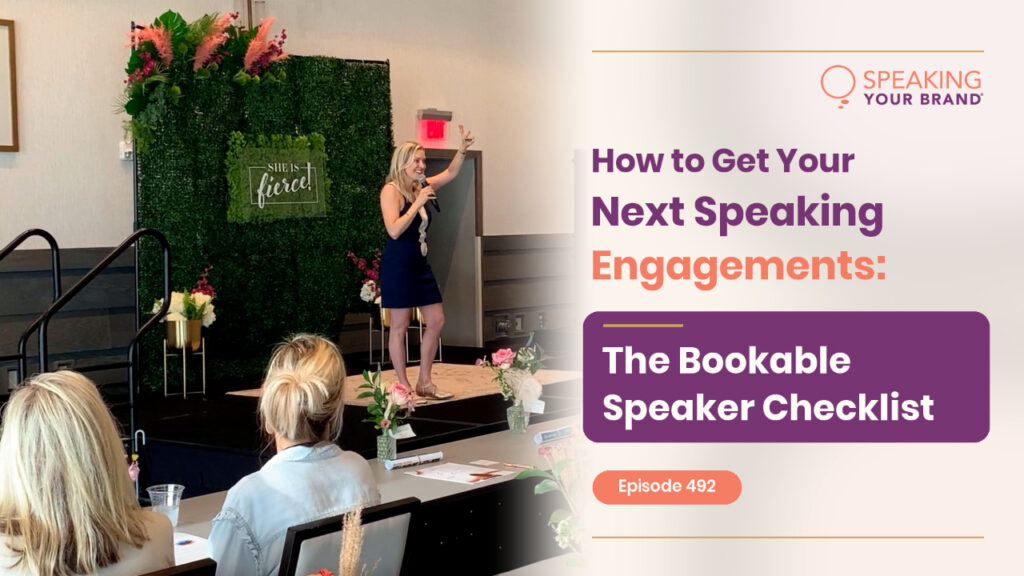
Yes. Yeah, exactly. And, you know, thinking about what setting all of this up in act one is that by the time the audience hears that they’re excited for your solution, now, they want it like they are on the edge of their seat. They want to know how to solve this real problem that you’ve shown them. Because back to what I said earlier, they want to understand themselves better where they’re getting stuck that they didn’t recognize. And now you are providing that validation for where they’re at, where they want to go. You’re empathizing with what is challenging to them, and then you’re showing them what’s possible. So now they’re eager and excited to continue to hear the rest of your presentation. All right. So I mentioned that we’re going to come back to the presentation that Diane delivered at a women’s local women’s business group. And she did such an amazing job. And I got to be there in the audience and and see her. So I did a little bit of behind the scenes filming while I was there, but it was it was a full, full crowd for that. And because of the way that we used our framework with the act one, act two, act three, and planting the sale seeds and, and also had a very, very clear, a very clear offer with a sense of urgency behind it is why we got the three clients on the spot who paid and signed up for an upcoming workshop that we were holding. So, Diane. Let’s go. Think about back to that presentation. How did you plant sales seeds in there so that it felt natural for you, but also just felt like the audience didn’t even think about it. They didn’t think about them as them being sales seeds.
Diane Diaz:
Well, one great way to do that is with client examples, right? And so we happen to have actual clients. So what I did was as I laid out my so the topic that I it was on personal branding. But I worked in storytelling because these things all build your personal brand. Right. So it was about um, it was making your personal brand raw instead of whisper. Right? So in the three things, I was sharing the three key points, which I can’t remember off the top of my head, but I talked about storytelling. I talked about, um, I think your I think it might have been your brand voice canvas. I can’t remember now, but I had the three things. And for each one of those three things, I tried to think of a client example where I knew like that was sort of the main thing that that particular client got out of it when we worked together, or when they came to our workshop or whatever the, the, the way that we worked with them. And so I told that client’s story and how applying this thing that I just shared with the audience about, let’s say, storytelling, how a client in my example, how she had to change her whole story of what she was talking about, about herself because she was shifting her personal brand, I connected it back to personal branding.
Diane Diaz:
So actually illustrating with a real live client that they used the storytelling to shift their personal brand, to go from being a physician to being a healthcare advocate. Right. So it’s a whole different type of story she’s telling about herself, but it’s based on her story. So I used actual client examples. Now I could have used my own examples, but in this case I’m trying to get clients right. So I wanted to show like that is showing that we do this work with people just like you in the audience. And here’s the outcome they had from it. And it was not icky. I mean, I mentioned and let me tell you about a great example of this, our client, so-and-so, who came to our workshop. When she came to the workshop, she had this issue that she was dealing with, shifting her personal brand from being a physician to being a healthcare advocate. We worked together with her on XYZ, and then she was able to position her personal brand as this expert in health healthcare advocacy, because she went through it herself with her own personal situation.
Diane Diaz:
So now the audience knows, oh, what she’s telling me this actual client worked on. Diane worked with this client on that. And there was the outcome. Never once did I mention, you know, during that time, like anything salesy or. And because she joined in this time. No, I just shared an example. That’s all right. Then I went on to the next point. I talked about the point. Of course, I had audience engagement all along the way, raising their hands, answering questions shared another example of a different client that sort of met the whatever the particular topic was. So by sharing the examples, I’m mentioning the client that had the outcome and I’m saying like when I worked with so and so or when so and so came to our workshop, or when so and so was part of the Thought Leader Academy. So now the audience knows. Oh okay. Got it, got it, got it. Yes. She does this work. She worked with that client. So then when I get to the end and I’m making the call to action, they are already bought in to that I do this, I, they want to be part of this now.
Carol Cox:
Yes. And in this case, the the group that you were speaking at was okay for you to actually share with the audience that we had this workshop coming up a few weeks later. And so for people who wanted to register that they could and we I think we gave a discount code for them. If they registered that same day.
Diane Diaz:
That same day.
Carol Cox:
They got $100 off or whatever it happened to be. So that was a sense of urgency because we know people procrastinate or they delay, or they get busy doing something else when they get out of the event. So we wanted to give them that sense of urgency. The other thing that we did is that we used paper feedback forms. I know in this digital age we use that. So tell us a little bit about the feedback forms.
Diane Diaz:
Yes, I love the feedback form, especially now you. I wouldn’t recommend using those if you speak to a large conference that you know, 100 people, a thousand people, that’s not going to work. But if you’re talking to a group that’s maybe 50, 60, 70, 40, 20, right? It works great. So I make it part of a workbook. The workbook is super simple. Don’t think anything complicated. It could be three pages, right? It could be your cover page, the one worksheet and then the feedback form. And so I put that on their chairs or at their place setting before the thing starts. And then I refer to this workbook and it’s super simple stuff like whatever topic I’m talking about at that moment. The particular point now in your workbook, I want you to jot down the last time you heard a compelling story. Something simple. It doesn’t have to be complicated. Then when I get to the end of my talk, I make the call to action offer before I take questions, before I say thank you and I’m done, I say. Now on the last page you’ll notice a feedback form. I would love to get your feedback about my talk so I can improve upon it.
Diane Diaz:
You’ll also notice at the bottom of the feedback form there are checkboxes. You can check that off if you want to be added to our email list. Or maybe you would like to refer me to speak somewhere else. Or maybe you’d like to set up a console call. So whatever your. Whatever you want your checkboxes to be. And then I tell them, now go ahead and fill that out. Hopefully if you have someone lovely assistant like Carol who is actually in attendance, Carol will come around and pick those up for you while I’m answering questions. So go ahead and fill those out. And then I show them like just tear off this page, right. And Carol will come around and collect those now. I’d be happy to answer any questions now. They are filling that out while I am taking questions. So my time is still going here, but they’re doing their part. And if I tell if I say fill it out, they feel like they have to, right? Because I’ve told them to. So they most of them will do. Now, you’re not going to get 100% of them back if you do. That’s great. I don’t know, we usually get what maybe like 60%.
Carol Cox:
Yeah almost. Yeah. Almost two thirds. Yeah.
Diane Diaz:
That’s fine. Um, and most people will at a minimum check off to be added to your email list. Great, great way to build your email list. A lot of them will say, uh, I’d like to set up a console call to just chat with you because maybe they don’t want to come to the workshop that I just offered, but they maybe they have another thing that they’d like to work on. Great. And then that gives me the opportunity to follow up with them. It also, I love it because it gives me little. One of the spaces on there is, you know, well, one of them is like, what? What was the biggest thing you learned from today’s workshop? Right? And they write down something. And then the other thing is like, what’s some way that I can make it better? Usually most people will say, oh, actually, it was great. There’s nothing to improve but that little. What did they learn? That’s a little nugget you could put on your website, on your speaking page. Like, you know, Diane’s talk was fabulous. I learned more about personal branding in one hour than I’ve learned in my whole life. Whatever. Put that on your speaker page. That’s great. That’s gold.
Carol Cox:
Yes, I love the paper feedback form. And I know that there are online services like talk a Dot that our clients have used, and they find a lot of success with those as well. So definitely try, try, you know, both the digital and the paper. I like the paper because they they feel kind of compelled to do it because they see the people around them filling it out. So they’re more likely to fill it out. So you may get a higher response rate. Now as far as getting people to actually purchase something right then and there, if that is something either the event is going is okay with you doing and it’s aligned with you do have something coming up that is a little bit more time sensitive. So what you can do is that. What I’ll often do in the worksheet is have a QR code that goes to the sales page of, say, the workshop, so they can enter their credit card information right then and there. There’s also a QR code on the slide. So whatever slide is up like the thank you slide that will go there. The other thing you can do is on your phone, you can have a payment app. So you can actually take the person’s payment right then and there. I think I’m using square. So square is super easy to use. It’s just an app that you download on your phone. You connect your business checking account and all of that through square and then you don’t. And I we use stripe for most of our payment processing on the website. It doesn’t matter. You just use square for the app on your phone.
Carol Cox:
And we’ve actually used that and it has worked great. So there’s a number of ways you can do it. Uh, so to encourage people to go ahead and take care of it then versus later. The other tip I have for you is that if, say, after you’re done with your presentation and someone you know. You have some people who are online and they want to chat with you, and you have someone who comes up to you and says something like, oh, you know, I really enjoy your presentation. I’ve been needing help with whatever it is that you do, you know, I’ll reach out to you, or can I get your business card or whatever you can say, oh, that would be great. Let’s go ahead and get something on our calendar now, because I know we’re going to get busy and that way we don’t forget. So then pull out your phone like have your phone handy somewhere. Not your phone during your talk, but know that you can grab afterwards and say let’s go ahead and fill out. Okay. Oh, how about next Tuesday at 2 p.m.? Okay. That works for you. Great. I’m going to go ahead and just like pencil this in. And then when I get back to my computer later on today I’ll send you a formal invite with the zoom link or what have you. Get it on the calendar right then and there. That’s going to make a huge difference to actually getting those, those, those things scheduled versus just hoping that, you know, they respond to your email later.
Diane Diaz:
Yes, 100% agree with that.
Carol Cox:
And so we mentioned Diane has done this successfully. A lot of the speaking engagements that I do, as long as the audience is aligned. So we know that the audience has people in there who are the types of clients that we work with. Then I also get clients from the speaking engagements that I do because again, we use this this three act structure and especially that act one to make sure that we are getting buy in from the audience and then leading them along the way so that they understand themselves better, and then understand why working with us would help them to achieve their goals. I want to mention one of our clients, Danielle Hayden, and I talk about her a lot. It’s such an excellent case study, and I’ll include a link in the show notes to the podcast interview that I did with Danielle. So we were together in a VIP day, and she had been doing a lot of speaking for lead generation for her business. She does. She has a bookkeeping agency, so she’s the founder and she has bookkeepers and they work with entrepreneurs on their Bookkeeping and CFO services, and she’s been doing this business, I think, for probably about ten years now. So she does she gets a lot of leads from podcasts and from her speaking. But then she noticed, like maybe it wasn’t working as well as it used to be. And so she felt like she felt like she needed a refresh talk. So we did the VIP day, and she’s looking at me kind of like side eye because I’m asking her questions about her childhood. Like, how did she feel about money and talking about money, right? And she’s like, Carol, why are you asking me these questions? I don’t share personal stories in my talks and I’m like, haha, well, you will now the reason for that, you’re going to see why.
Carol Cox:
Yeah. And then she explained to me when I looked at one of her existing presentations. And she is not alone in this. This is what almost everyone does. The presentation she had been delivering were teaching her audience how to do bookkeeping. But guess what? Like as a business owner, I don’t want to do bookkeeping. I don’t want to learn bookkeeping. I want to know how to read my reports and how to know how my business is doing. But I don’t need to learn all the intricacies of bookkeeping. That’s why I’m not a bookkeeper, and that’s why I need to hire a bookkeeper. So you can see how Danielle was stuck in the expert trap. She was giving her audience those valuable information, but it wasn’t the right information for them. So we took a step back, and I’m like, okay, let’s think about your audience. What do they need? What is tripping them up? So then we identified her thought leadership message, mapped out her talk, completely changed. It added in some of those childhood stories. She went and she delivered it a few weeks later because she had a conference on the calendar. And she comes back and she says to me, I got the most clients from that presentation than anyone I have ever done before. And she said there were women in the audience crying when I shared my personal story, and that’s what connected them to me. And I had no idea that that was gonna happen.
Diane Diaz:
Yes. Listen, there is a reason why big brands use emotional stories. Think Nike and the Serena Williams ad about crazy. Think the Publix ads. If you’re familiar with Publix at the holidays, the hallmark card ads. There’s a reason why they pull on your heartstrings and use emotion, because it hooks us in and makes us feel connected, and then we want to do business.
Carol Cox:
Yes, exactly. Yes. And those were her authentic stories. Yes. But it also was because. Because she’s talking about money and finances. A lot of people have a lot of shame around it. Or embarrassment.
Diane Diaz:
It’s a very emotional.
Carol Cox:
Topic, very emotional topic, even though we don’t want to think. So by her showing that vulnerability, that little bit of vulnerability, all of a sudden her audience realized Danielle’s not going to judge me, right? She’s not going to think that I don’t know what I’m doing. She’s not going to think that I’m weird for having these, you know, these things that that I think about money or whatever because she was willing to go first?
Diane Diaz:
Yes.
Carol Cox:
With the vulnerability, that’s what your storytelling does.
Diane Diaz:
You create a safe space for your audience.
Carol Cox:
Yes, exactly. So that’s how to think of your talks as a marketer. Think about like the traditional funnel. You’re drawing attention. You’re generating interest by understanding what they what the audience wants, what their goals are. You’re generating that desire, solving that real problem for them, and then you’re giving them that very clear and specific call to action at.
Diane Diaz:
One call to action, one.
Carol Cox:
Call to action for how they can work with you, whatever is the best fit for that audience. So now here’s our call to action.
Diane Diaz:
Yeah, you.
Carol Cox:
Want to work with us on creating your signature talk, especially for lead generation, but also for keynotes. You can also drop sale seeds in your keynotes and you should. This is the work that we do in our online program, the Thought Leader Academy. We can also do standalone VIP days or more extensive coaching as well, if that’s something that’s a better fit for you And if you like, in person. We do our one day speaking workshops in Orlando a couple of times a year. The best thing to do is go to speaking your brand.com. Schedule a consultation call with us. Just go to the contact page. You can pick a date and time right there, and then we’ll talk about your goals and how we can best work together based on what is the best fit for you. So again, go to speaking your Brand.com. You can see all of the different ways that you can work with us under the work with Us tab, and then schedule that consultation call with us. All right. And if you haven’t yet listened to part one, go back and listen to that now. And Diane, thank you so much, as always, for coming on the podcast and for doing such a great job working with our clients.
Diane Diaz:
Oh, thank you so much. It’s so fun, I enjoy it.
Carol Cox:
Until next time. Thanks for listening.
Sonix has many features that you’d love including advanced search, world-class support, automatic transcription software, collaboration tools, and easily transcribe your Zoom meetings. Try Sonix for free today.