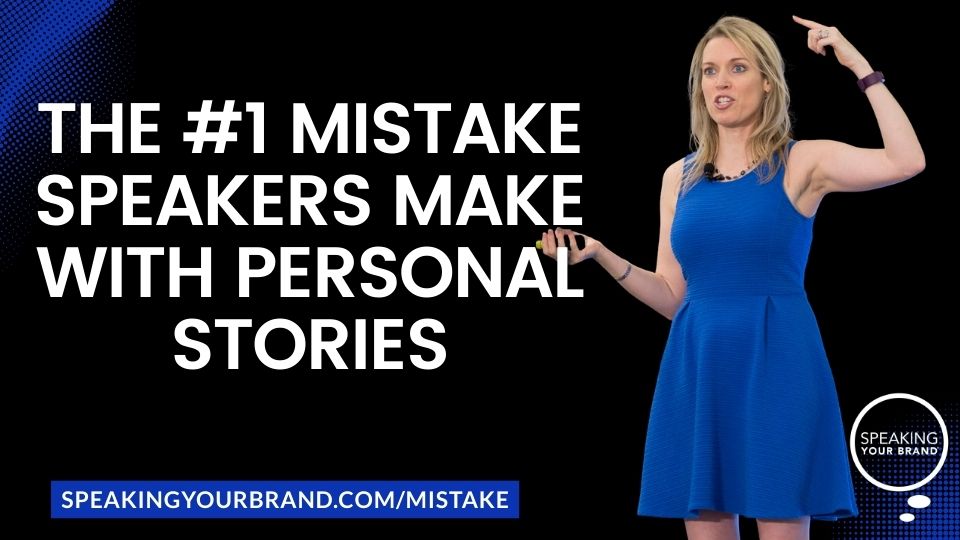
The #1 Mistake Speakers Make with Personal Stories (and What to Do Instead)
Subscribe to the podcast!


Storytelling is one of the most powerful tools you have as a speaker, leader, or thought leader. A well-told story can create instant connection, build trust, and help your audience see themselves—and their possibilities—more clearly.
But let’s be honest: not all storytelling works.
We’ve all heard stories that made us lean in…
And stories that made us silently wonder, “Why are you telling me this?”
In this episode of the Speaking Your Brand podcast, I sat down with our lead speaking coach, Diane Diaz, to unpack the difference between authentic storytelling and what we jokingly call “icky” or contrived storytelling—the kind that feels manipulative, self-centered, or just plain uncomfortable.
This topic comes up constantly with the women we work with, especially inside the Thought Leader Academy. Questions like:
-
Is sharing my personal story self-indulgent?
-
Am I being too vulnerable—or not vulnerable enough?
-
How do I know if my story is helping the audience or just serving me?
Let’s break this down.
Why Storytelling Can Go Wrong
Most people don’t intend to tell bad stories. The problem isn’t storytelling itself—it’s how and why the story is being told.
Here are the most common ways storytelling goes off the rails.
1. Stories That Don’t Connect to the Message
If your audience is thinking, “What does this have to do with anything?” you’ve lost them.
A story doesn’t have to start with an obvious connection—but it must eventually connect back to the core idea of your talk. When it doesn’t, it feels random and confusing instead of meaningful.
Audience reaction: confusion, disengagement, mental checkout.
2. TMI or “Open Wound” Stories
Details matter. They make stories real.
But there’s a line between vivid and too much.
If you haven’t fully processed the experience yourself—or you’re using the audience as a form of therapy—the story can feel heavy, uncomfortable, or inappropriate for the setting.
It’s okay to still feel emotion when telling a story.
It’s not okay to emotionally collapse into the audience.
3. Over-the-Top or Manipulative Language
When a speaker leans on extreme language like:
-
“No one has ever experienced what I went through”
-
“This was the worst thing anyone could imagine”
…it raises red flags.
This kind of language often feels emotionally manipulative rather than connective—and it can erode trust fast.
4. Rags-to-Riches Sales Stories
We’ve all seen them.
The highly polished, formulaic “I was broke and miserable, now I’m wildly successful, and here’s what I’m selling” story.
Yes, speaking can (and should) support your business.
But when the primary purpose of the story is to sell, audiences feel it—and they resist it.
5. Stories That Shame the Audience (or Others)
Another big storytelling misstep is using your story to imply:
-
“If I could do this, you should be able to, too”
-
“If you haven’t figured this out, you’re doing something wrong”
This shows up a lot in marketing—and it almost always backfires.
Your story should create possibility, not pressure.
What Authentic Storytelling Actually Looks Like
So if that’s what not to do… what does authentic storytelling look like?
1. Your Story Is in Service of the Audience
This is the most important takeaway from the episode:
Your stories are not about you.
They’re about what your audience can take from them.
Before sharing any story, ask:
-
How will this help my audience see something differently?
-
What lesson or insight will they walk away with?
-
How does this story support the larger message?
2. You’ve Processed the Experience
Authentic stories come from the other side of the experience—not the middle of it.
You may still feel emotion (that’s a good thing).
But you’re no longer trying to figure it out while telling the story.
That emotional maturity is what allows vulnerability to feel grounded instead of overwhelming.
3. You Don’t Smooth Down the Edges
Many women worry that if they tell the full truth, they won’t look credible or confident.
So they polish. They edit. They remove the messy parts.
But here’s the irony:
Those messy parts are usually where the audience connects most.
When you’re willing to say:
-
“I didn’t handle this well”
-
“I wasn’t as confident as I wanted to be”
-
“This is where I struggled”
…you create trust, not doubt.
4. You Share the Deepest Truth (Even If It’s Uncomfortable)
Some of the most powerful stories don’t make us look great.
I’ve shared stories on this podcast—and from the stage—about moments where I froze, doubted myself, or chose the easier path instead of the braver one.
Not because I enjoy reliving them—but because those moments are real. And real stories signal to your audience:
You don’t have to be perfect to lead, speak, or make an impact.
5. The Story Leads to Meaning
Authentic stories don’t end with “And that was terrible.”
They end with insight.
What did you learn?
How did it shape how you think or lead today?
How does it help someone else navigate their own situation?
That’s where transformation happens.
Client Examples: When Storytelling Unlocks Trust
We see this again and again with our clients.
-
A speaker who worries her story is “too recent” learns how to share it responsibly, with reflection and purpose.
-
A financial professional fears her past mistakes will undermine credibility—only to realize those experiences increase trust.
-
A leader stops hiding the imperfect parts of her journey and suddenly feels freer, more confident, and more connected to her audience.
When stories are told with intention, they don’t weaken your message.
They anchor it.
Action Steps: How to Audit Your Own Stories
Here’s how to apply this to your own speaking and content.
1. Run Your Story Through the “Audience Test”
Ask:
-
Who does this story serve?
-
What’s the takeaway for them?
-
Would this still matter if I weren’t the one telling it?
If the benefit is unclear, refine—or remove it.
2. Check Your Emotional Distance
Ask:
-
Have I processed this experience?
-
Can I tell it without needing validation or reassurance from the audience?
If not, the story may need more time.
3. Identify the Lesson Before the Story
Before telling the story, write down:
-
The insight
-
The shift
-
The belief or behavior you want the audience to reconsider
Then tell only the parts of the story that support that.
4. Look for Over-Polishing
Notice where you might be:
-
Making yourself look “better”
-
Removing uncertainty or struggle
-
Avoiding the uncomfortable truth
Those moments are often where the power lives.
5. Remember This One Rule
If you remember nothing else, remember this:
Your story is not your therapy.
It’s your gift to the audience.
When you tell it with intention, care, and honesty, it becomes one of the most effective tools you have for influence, leadership, and connection.
If you want help shaping your stories into something that feels authentic, strategic, and aligned with your bigger message, that’s exactly the work we do at Speaking Your Brand.
Check out our coaching programs and schedule a call with us.